
Vertical Gardening 101 and the DIY Hydroponic Tower
Grow More Food in Less Space: Your DIY Hydroponic Tower Starter Guide
A diy hydroponic tower lets you grow 20 to 35+ plants in the footprint of a single pot — no soil, no yard, no complicated setup required.
Here’s what you need to know to get started fast:
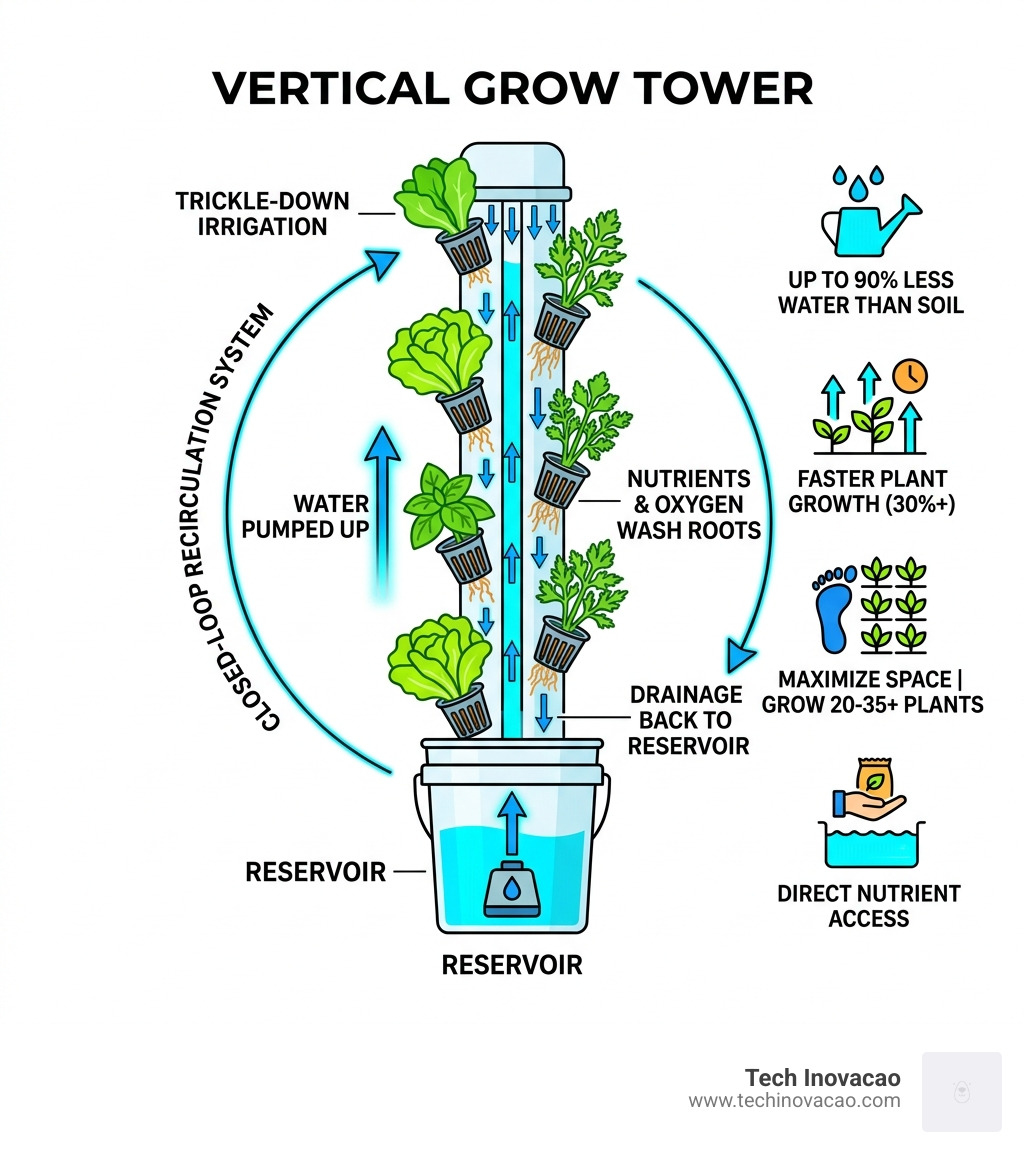
- What it is: A vertical, soil-free growing system where nutrient-rich water circulates from a reservoir at the base up to the top of the tower, then trickles down past plant roots and back into the reservoir.
- What you need: A 4–6 inch PVC pipe or vinyl fence post, a 5-gallon reservoir bucket, a 250–400 GPH submersible pump, net pots, growing medium, and nutrients.
- What it costs: A basic DIY build runs $50–$150 in materials — compared to $500–$1,000+ for commercial systems.
- Best plants to start with: Lettuce, basil, spinach, kale, and herbs. These are fast-growing and thrive in tower systems.
- How long until harvest: Leafy greens are ready in 4–6 weeks. Herbs like basil can be harvested in as little as 3–4 weeks.
- Time to build: Most beginners finish their first tower in 2–4 hours.
If you’ve ever wished you could grow fresh food at home but felt blocked by limited space, time, or gardening know-how — a vertical hydroponic tower is built for exactly that situation.
Plants in these systems grow up to 30% faster than in soil, because their roots get constant, direct access to both nutrients and oxygen. The system recirculates water in a closed loop, using up to 90% less water than traditional gardening. That means lower bills, less waste, and fresher food — all from your balcony, kitchen, or garage.
The best part? You don’t need to be an engineer or an experienced gardener to build one. With basic tools and materials from any hardware store, you can have a functioning tower ready to plant in a single afternoon.
This guide walks you through everything — from building your first tower to keeping it running smoothly year after year.
Understanding the Vertical Revolution: Benefits and Mechanics
In April 2026, the trend of “growing up” rather than “growing out” has reached an all-time high. As urban spaces become more compact, we are seeing a massive shift toward vertical farming. A diy hydroponic tower isn’t just a fun weekend project; it is a highly efficient machine designed for maximum yield.
The core mechanics rely on the Nutrient Film Technique (NFT) or a variation of a drip system. In our vertical setup, a submersible pump sits in a reservoir (usually a 5-gallon bucket or a specialized tub) and pushes water through a tube to the very top of the tower. From there, gravity takes over. The water trickles down the inside of the pipe, creating a thin film of nutrient-rich liquid that washes over the roots of your plants.
The Science of Speed and Savings
Why do plants grow up to 30% faster in these towers? In soil, roots have to “hunt” for nutrients and fight for oxygen in compacted dirt. In a hydroponic tower, the roots are suspended in air or a lightweight medium like clay pebbles. They receive a constant “bubble spa day” of oxygen and a direct delivery of minerals. This high-oxygen environment prevents root rot and supercharges growth.
Furthermore, these systems are champions of sustainability. Because the water is recirculated in a closed loop rather than draining away into the earth, a diy hydroponic tower uses 90% to 98% less water than traditional gardening. It’s like trading a gas-guzzling truck for a high-end electric vehicle; you get more performance with a fraction of the resources.
Hydroponics vs. Aeroponics
While we often use the terms interchangeably, there is a slight difference. Standard hydroponics involves a steady flow or drip of water. Aeroponics involves misting the roots with a fine spray. Aeroponics can offer even higher oxygen levels, but it requires high-pressure pumps and misters that can clog easily. For most home growers in April 2026, a standard hydroponic flow system is the “easy mode” of gardening—reliable, simple to build, and incredibly effective.
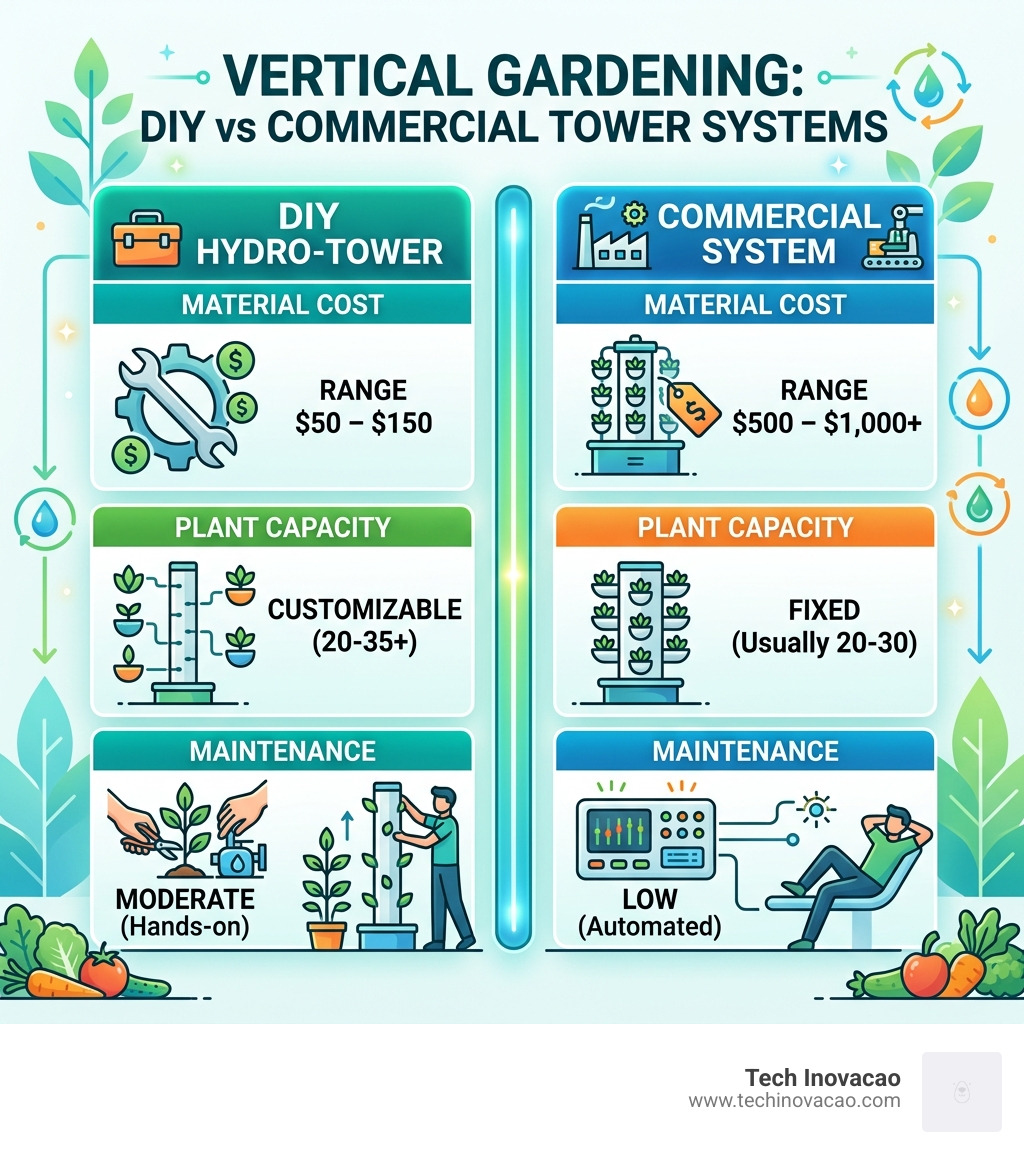
| Feature | DIY Hydroponic Tower | Commercial Systems |
|---|---|---|
| Material Cost | $50 – $150 | $500 – $1,000+ |
| Plant Capacity | Customizable (20-35+) | Fixed (usually 20-30) |
| Maintenance | Moderate (Hands-on) | Low (Automated) |
| Repairability | High (Standard parts) | Low (Proprietary parts) |
| Annual Savings | $200 – $400 in groceries | 2-3 years to break even |
Why Choose a DIY Hydroponic Tower Over Commercial Systems?
We often get asked why someone should bother with a drill and PVC glue when they could just buy a pre-made kit. The answer comes down to three things: cost, customization, and connection.
Commercial towers are beautiful, but they come with a “designer” price tag. By building your own, you save hundreds of dollars that can be spent on high-quality seeds and nutrients instead. Additionally, DIY builds allow you to choose food-grade materials like UV-stabilized uPVC or HDPE, ensuring your produce is safe and free from chemical leaching.
According to How to Make a DIY Hydroponic Tower System – Biology Insights, the ability to customize your tower height and hole spacing means you can tailor the system to your specific balcony or kitchen corner. There is also a deep sense of satisfaction in eating a salad grown in a machine you built with your own two hands.
Step-by-Step Guide to Building a DIY Hydroponic Tower
Ready to get your hands dirty (metaphorically, since we aren’t using soil)? Building a diy hydroponic tower is a straightforward process that usually takes about 2 to 4 hours.
Tools and Materials Checklist
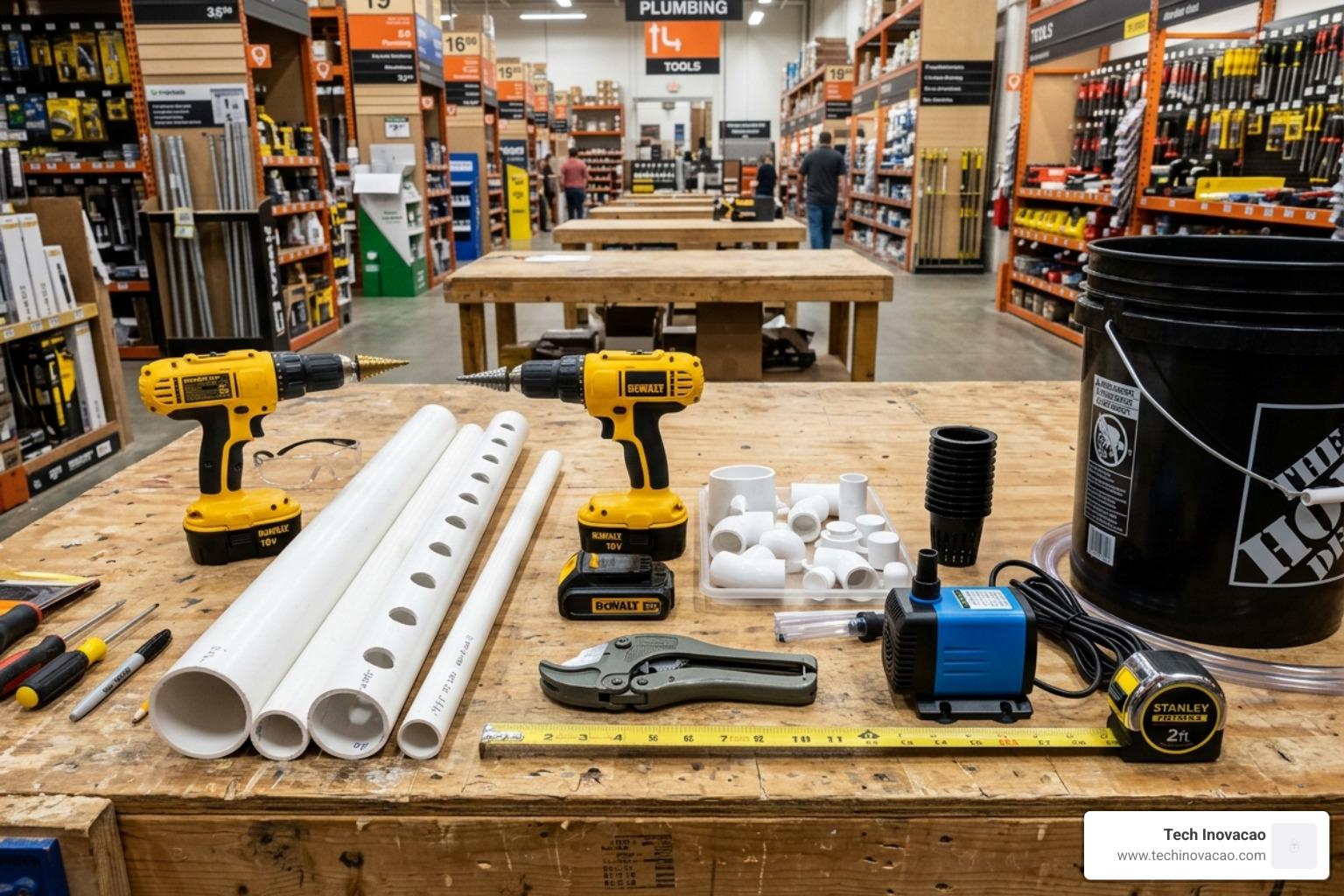
Before you head to the hardware store, make sure you have this list ready:
- Main Structure: A 4-foot to 6-foot length of 4-inch or 6-inch PVC pipe (Schedule 40 or food-grade).
- Reservoir: A 5-gallon bucket with a tight-fitting lid (opaque to prevent algae).
- Water Pump: A submersible pump rated for 250–400 GPH (Gallons Per Hour). Ensure it has enough “head height” to reach the top of your tower.
- Tubing: 1/2-inch vinyl or poly tubing to connect the pump to the top.
- Planting Sites: 2-inch or 3-inch net pots (20 to 30 units).
- Hardware: A drill with a hole saw (matching your net pot size), a heat gun (optional but helpful for flaring holes), and PVC epoxy or waterproof sealant.
- Growing Medium: Clay pebbles (hydroton) or rockwool cubes.
The Build Process
- Mark Your Pattern: Use a measuring tape to mark your planting holes. We recommend a staggered spiral pattern. Space holes about 6–8 inches apart vertically and rotate them around the pipe. This ensures that as plants grow, they don’t block the light or water from the neighbors below them.
- Cut the Holes: Using your hole saw, carefully drill the holes. If you want a more “professional” look, some builders use a heat gun to soften the PVC around the hole and then push a smaller pipe inside at a 45-degree angle to create a “lip” or pocket. This prevents water from splashing out and helps the net pots sit securely.
- Prepare the Reservoir: Drill a hole in the center of your bucket lid just large enough for the PVC tower to fit through. You’ll also need a small notch or second hole for the pump’s power cord and the water delivery tube.
- Install the “Plumbing”: Attach your vinyl tubing to the pump and place the pump at the bottom of the bucket. Run the tube up through the center of the PVC pipe to the very top. At the top, you can use a “T” fitting or a manifold to distribute the water evenly so it trickles down all sides of the inner wall.
- Secure and Seal: Place the tower into the lid. Use a waterproof sealant or a PVC flange to make sure the tower is stable. Stability is key—a 6-foot tower full of wet plants can get top-heavy!
- The Leak Test: Fill the reservoir with plain water and turn on the pump. Watch the water flow. You want a steady trickle down the inside walls, not a torrential downpour that splashes out of the planting holes.
For a more detailed visual on the assembly, you can check out this guide on DIY Hydroponic Tower for Home Gardeners – Seed Sheets.
Maintenance and Plant Selection for Peak Yields
Once your tower is standing and the water is flowing, the real magic begins. However, a diy hydroponic tower is a living ecosystem, and it requires a little bit of “parenting” to stay productive.
Choosing the Right Plants
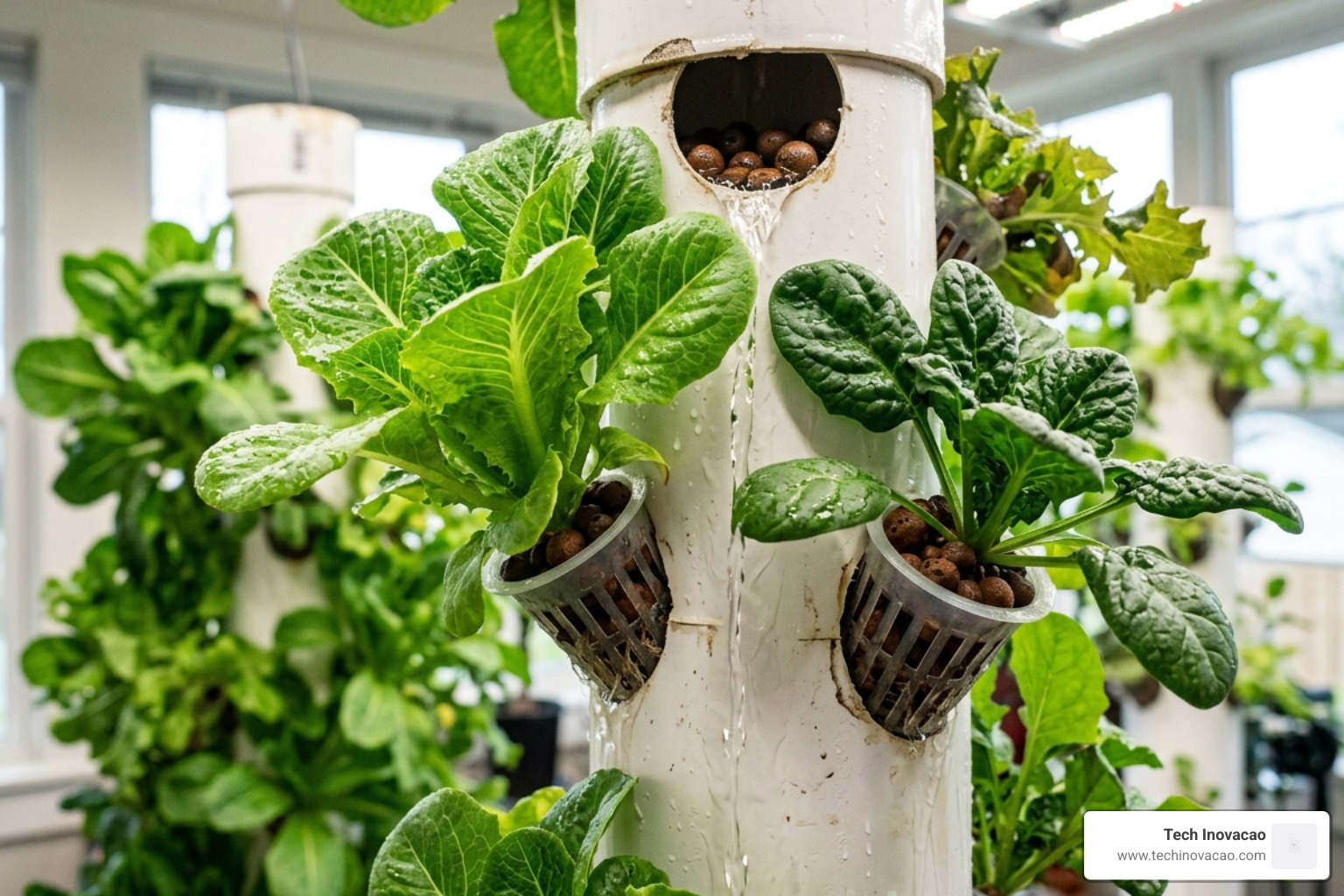
Not all plants are built for tower life. We want to focus on plants that have manageable root systems and don’t grow into massive bushes that would tip the tower over.
- The Superstars: Lettuce (all varieties), Spinach, Kale, Swiss Chard, and Bok Choy. These thrive in the constant moisture.
- The Herb Garden: Basil, Mint, Cilantro, Parsley, and Chives. Imagine having fresh pesto ingredients at your fingertips 24/7!
- The Sweet Choice: Strawberries are famous for tower growing. They cascade down the sides beautifully.
- What to Avoid: Avoid “heavy” plants like full-sized tomatoes, melons, or cucumbers unless you have a very robust support system. Also, skip root crops like carrots or potatoes—they need soil to expand.
The “Chemical” Balance: pH and EC
Since there is no soil to buffer the environment, you are the master of the water. You will need two inexpensive tools: a pH meter and an EC (Electrical Conductivity) meter.
- pH Level: Most plants prefer a slightly acidic environment. Aim for a pH of 5.5 to 6.5. If the pH is too high or too low, the plants can’t “eat” the nutrients, even if they are floating right next to them (this is called nutrient lockout).
- EC Level: This measures the concentration of nutrients in the water. For leafy greens, aim for an EC of 1.2 to 1.8. If the tips of your leaves look burnt, your EC is likely too high—just add more plain water to dilute it.
Weekly Maintenance Routine
- Check Water Levels: Plants “drink” a lot, especially in the summer. Top off the reservoir with fresh water every few days.
- Test pH/EC: Check these levels at least twice a week.
- Nutrient Refresh: Every 10 to 14 days, it is best to drain the reservoir and mix a completely fresh batch of nutrient solution. This prevents the buildup of “waste” salts that the plants don’t use.
- Cleaning: Between crop cycles, give the tower a deep clean. A diluted hydrogen peroxide solution works wonders for killing off any lingering pathogens without leaving toxic residues.
Troubleshooting Your DIY Hydroponic Tower
Even the best-built systems run into hiccups. Here is how to handle the common ones:
- Algae Growth: If you see green gunk in your reservoir or on your net pots, light is getting in. Algae needs light to grow. Use opaque buckets and paint your PVC tower white (or use white PVC) to reflect light and keep the internals dark.
- Pump Clogs: If the water stops flowing, check the pump intake. Roots sometimes find their way down into the reservoir and get sucked into the pump. A simple mesh pre-filter can save your pump’s life.
- Wilting Plants: This usually means a pump failure or a timer issue. If the roots dry out for even an hour on a hot day, the plants will wilt. Check your power source and tubing immediately.
- Root Rot: If the roots look brown and slimy instead of white and fuzzy, they aren’t getting enough oxygen. Ensure your pump is running on a frequent enough cycle (more on that below).
Advanced Customization: Lighting, Solar, and Indoor Setup
As we move through 2026, the technology for home gardening is becoming incredibly accessible. You can take your diy hydroponic tower from a basic PVC pipe to a high-tech food factory with a few upgrades.
Indoor Lighting
If you don’t have a sunny balcony, don’t worry. Indoor towers are actually easier to manage because you control the “weather.” To grow leafy greens indoors, you will need full-spectrum LED grow lights. Position them about 6–12 inches away from the tower. For the best results, keep the lights on for 12–16 hours a day. This mimics a perfect summer day, every single day.
Going Off-Grid: Solar Power
Integration of solar power makes the hydroponic tower energy-independent and sustainable. Since most hydroponic pumps are low-wattage, you can run them off a small 12V solar panel and a battery backup. This is perfect for the “set it and forget it” gardener or those living in areas with high electricity costs. A solar-powered tower means zero operating costs after the initial setup.
Weatherproofing and Pest Control
If your tower is outdoors, you’ll need to consider the elements. In high winds, a 6-foot tower acts like a sail. Secure it to a railing or use a heavy reservoir (like a 20-gallon tote) to lower the center of gravity. For pests, the beauty of hydroponics is the lack of soil-borne bugs. However, aphids can still fly in. A simple spray of neem oil or insecticidal soap usually keeps the “uninvited guests” away without ruining your organic harvest.
For those looking for even more effortless solutions, Tech Inovacao offers specialized systems that bring the power of agritech directly into your kitchen, making herb cultivation as easy as pressing a button.
Frequently Asked Questions
How tall should my tower be for a standard pump?
For most home setups, the “sweet spot” is 4 to 6 feet. A standard 250–400 GPH submersible pump usually has a “head height” (the maximum height it can push water) of about 6 to 8 feet. If you build a 10-foot tower, a small pump might only manage a weak dribble at the top. Always check the pump’s box for the “head height” rating before you finalize your tower’s height.
How often should I run the watering timer?
You don’t need to run the pump 24/7. In fact, giving the roots a “breather” is good for oxygenation. A common and effective schedule is 15 minutes ON and 45 minutes OFF. During the day, this keeps the roots moist but not drowned. At night, you can even set it to run only once every few hours to save energy and reduce noise.
Can I use a solar panel to run the system outdoors?
Absolutely! In April 2026, small-scale solar kits are more affordable than ever. You’ll need a 12V DC submersible pump, a small solar charge controller, and a 10W-20W solar panel. This setup allows your diy hydroponic tower to thrive in a sunny corner of the yard without needing an extension cord trailing across the grass.
Conclusion
Building a diy hydroponic tower is more than just a way to save money on groceries—it’s a step toward a more sustainable and self-sufficient lifestyle. Whether you are an urban dweller with a tiny balcony or a homeowner looking to maximize your yard’s potential, vertical gardening offers a high-tech, low-effort solution to fresh food.
At Tech Inovacao, we believe that everyone should have access to fresh, soil-free herbs and greens. Our mission is to put “hydroponic herbs at your fingertips,” making home cultivation effortless for everyone. By following this guide, you’re joining a global community of growers who are redefining what it means to have a green thumb.
So, grab your drill, pick out your favorite seeds, and start building. Fresh, sustainable abundance is just a build away—get growing today! For more tips on optimizing your home garden, visit us at Tech Inovacao.
