
Smart Cilantro Growing with the Best App-Based Systems
Why Smart Cilantro Growers Are Switching to App-Based Hydroponics
Cilantro app based hydroponics is one of the fastest-growing trends in home and commercial herb cultivation — and for good reason.
Here’s a quick comparison of the top app-based systems for growing cilantro:
| System Type | Best For | Key App Features | Growth Speed |
|---|---|---|---|
| Compact smart garden (e.g., pod-based) | Home/apartment | Watering reminders, light scheduling | Up to 5x faster than soil |
| NFT hydroponic system | Home to semi-commercial | pH, EC, flow rate monitoring | 40-50 days to harvest |
| Vertical farm (shipping container) | Commercial/institutional | Full automation, remote monitoring | 50 lbs/week output |
Fresh cilantro is one of the most in-demand herbs in home kitchens. But it’s also one of the trickiest to keep alive on a windowsill. It bolts fast, needs consistent moisture, and doesn’t last long from the grocery store.
That’s exactly why app-controlled hydroponic systems are such a game-changer.
These systems combine soil-free growing technology with smartphone control, so you can monitor pH, nutrients, light cycles, and water flow — all from your phone. No green thumb required.
The results are striking. A vertical farm at Illinois State University, for example, produces the equivalent output of 1-2 acres of traditional field cilantro from just 320 square feet — growing up to 4,600 plants using a fraction of the water. Home smart gardens, meanwhile, have sold over 150,000 units globally, bringing automated hydroponic herb growing to busy urban kitchens.
Whether you have a kitchen countertop or a commercial space, there’s an app-based hydroponic solution built for you.
This guide compares the best options across every scale — so you can find the right fit fast.
The Evolution of Cilantro App Based Hydroponics
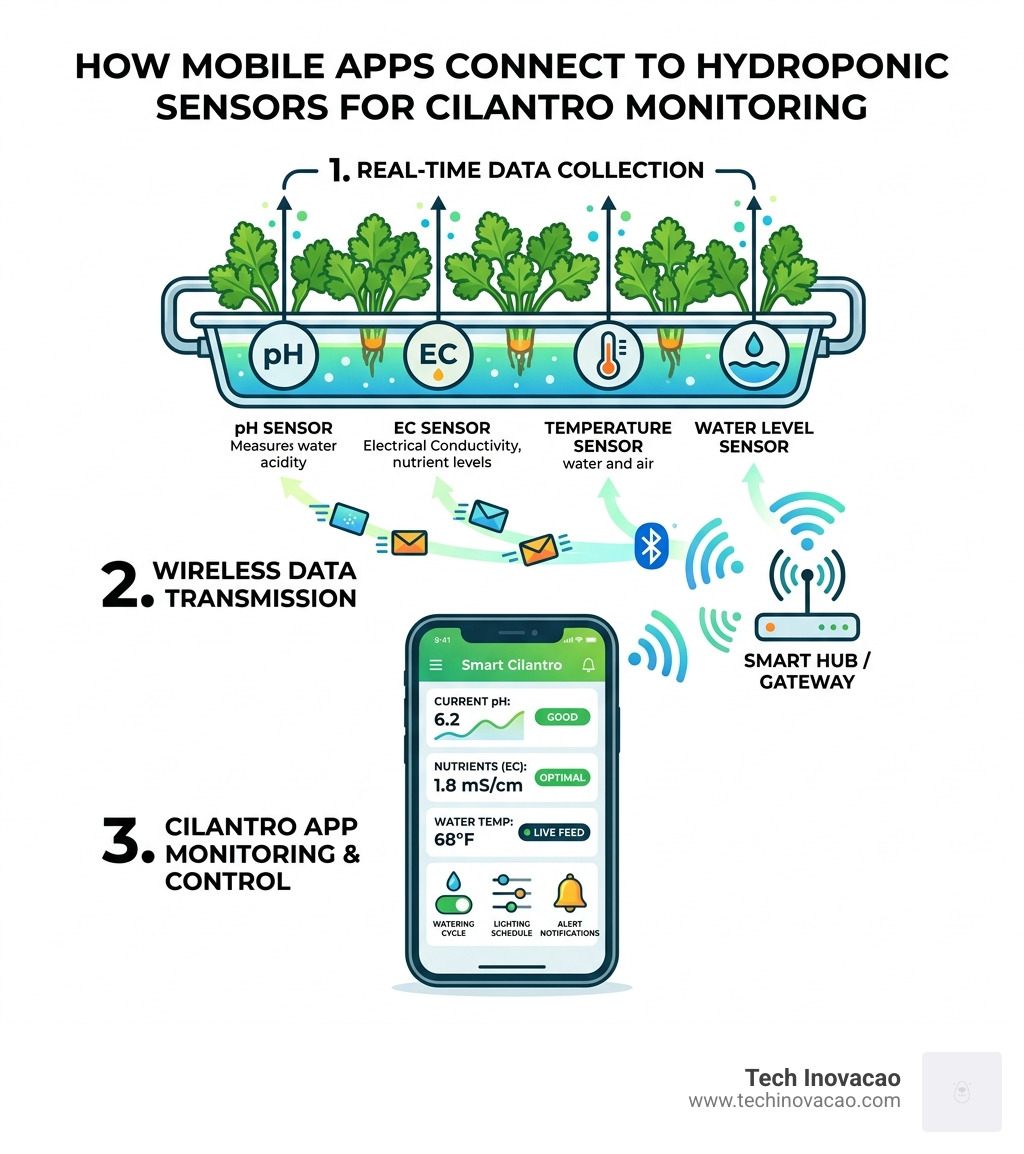
The journey of the humble cilantro leaf from a muddy field to a high-tech, glowing vertical rack is nothing short of a revolution. In the past, growing cilantro was a battle against the elements. If the sun was too hot, the plant would “bolt” (flowering and turning bitter); if the soil was too damp, the roots would rot. Today, cilantro app based hydroponics has removed the guesswork by integrating the Internet of Things (IoT) directly into the root zone.
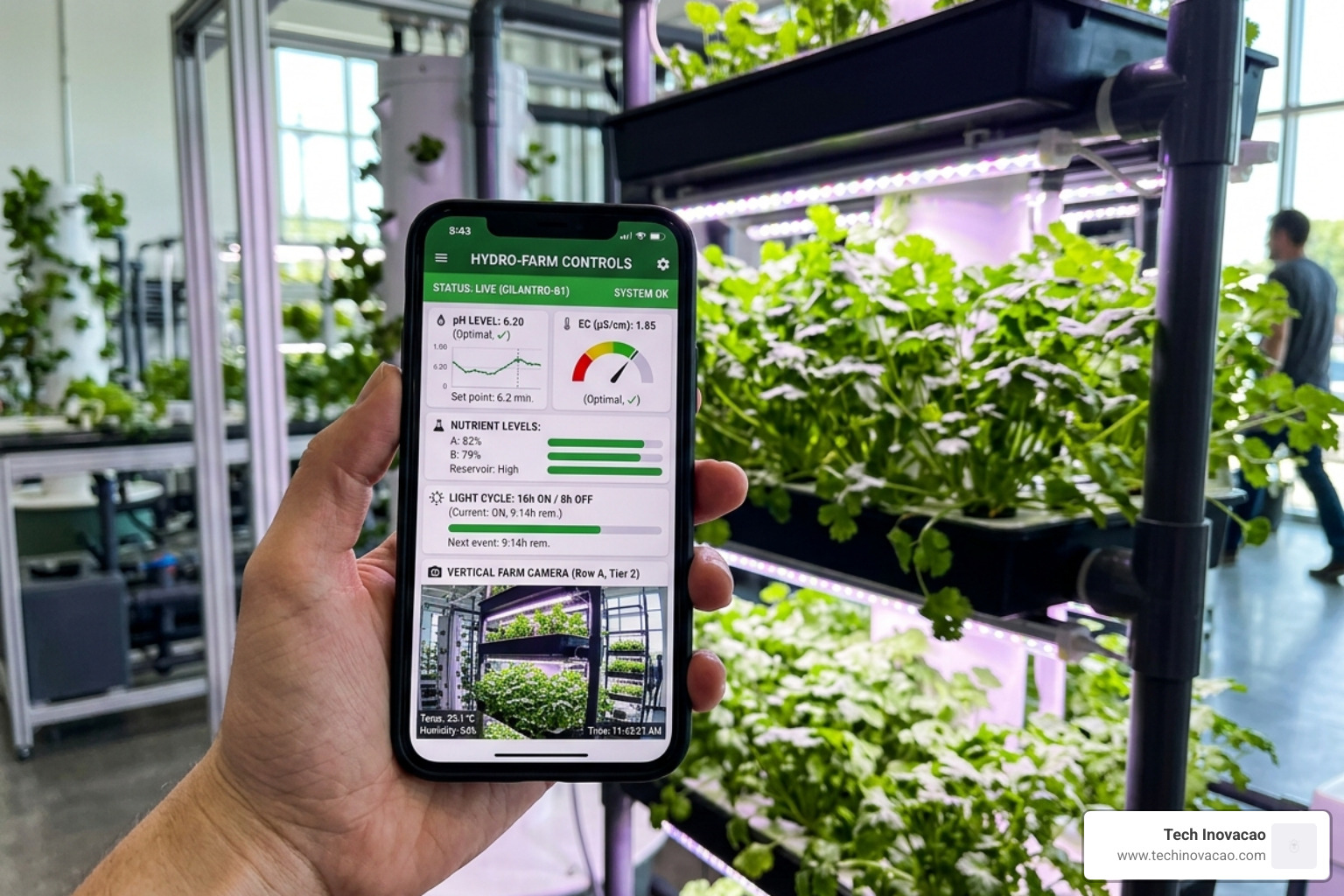
Modern systems use automated control to create a “perfect day” for the plant, every single day. By using mobile technology, we can now engage in remote monitoring of our crops. Whether you are at the office or on vacation, your smartphone acts as the brain of the operation. Integrated pH sensors and Electrical Conductivity (EC) tracking allow you to see exactly how much “food” your cilantro is eating in real-time.
One of the most significant leaps in this evolution is the ability to manage dissolved oxygen and water efficiency through automated pumps. Scientific research into cilantro salinity and nutrient flow has shown that by precisely controlling the environment, we can achieve pesticide-free production that is safer for consumers and better for the planet. This real-time data flow ensures that every one of the 4,600+ plants in a professional setup receives the exact same level of care, leading to a uniform, high-quality harvest that traditional farming simply cannot match.
Scientific Precision: Managing Salinity and Nutrients
Growing the perfect bunch of cilantro isn’t just about water and light; it’s about chemistry. Scientists have spent years studying how different nutrient solutions affect the “Verdão” cultivar and other popular varieties. One of the most fascinating aspects of cilantro app based hydroponics is how it handles brackish water—water that is saltier than fresh water but not as salty as the sea.
Research indicates that cilantro is surprisingly hardy. It can be cultivated using nutrient solutions with an electrical conductivity (ECns) of up to 3.0 dS m⁻¹ without severe damage to its photosynthetic parameters. However, the ionic composition of that salt matters. For instance, water dominant in NaCl (table salt) affects the plant differently than water dominant in CaCl2.
Precision Monitoring in Cilantro App Based Hydroponics
When we use an app to monitor our cilantro, we are looking for specific thresholds. While cilantro can maintain leaf chlorophyll concentrations up to an ECns of 4.5 dS m⁻¹, its gas exchange (how it “breathes”) begins to slow down. High-end app algorithms now use this scientific data to suggest mitigation strategies. If the sensors detect a spike in salinity, the AI-driven optimization can automatically trigger a fresh water flush or adjust the nutrient ratio to protect the stomatal conductance and photosynthetic rate of the leaves.
Commercial Yields via Cilantro App Based Hydroponics
For those looking at the bigger picture, the scalability of these systems is mind-blowing. Take the example of shipping container farming. By using a 320-square-foot converted unit, a single vertical farm can produce 50 pounds of cilantro per week. This is enough to supply a large campus dining hall or a local restaurant chain year-round.
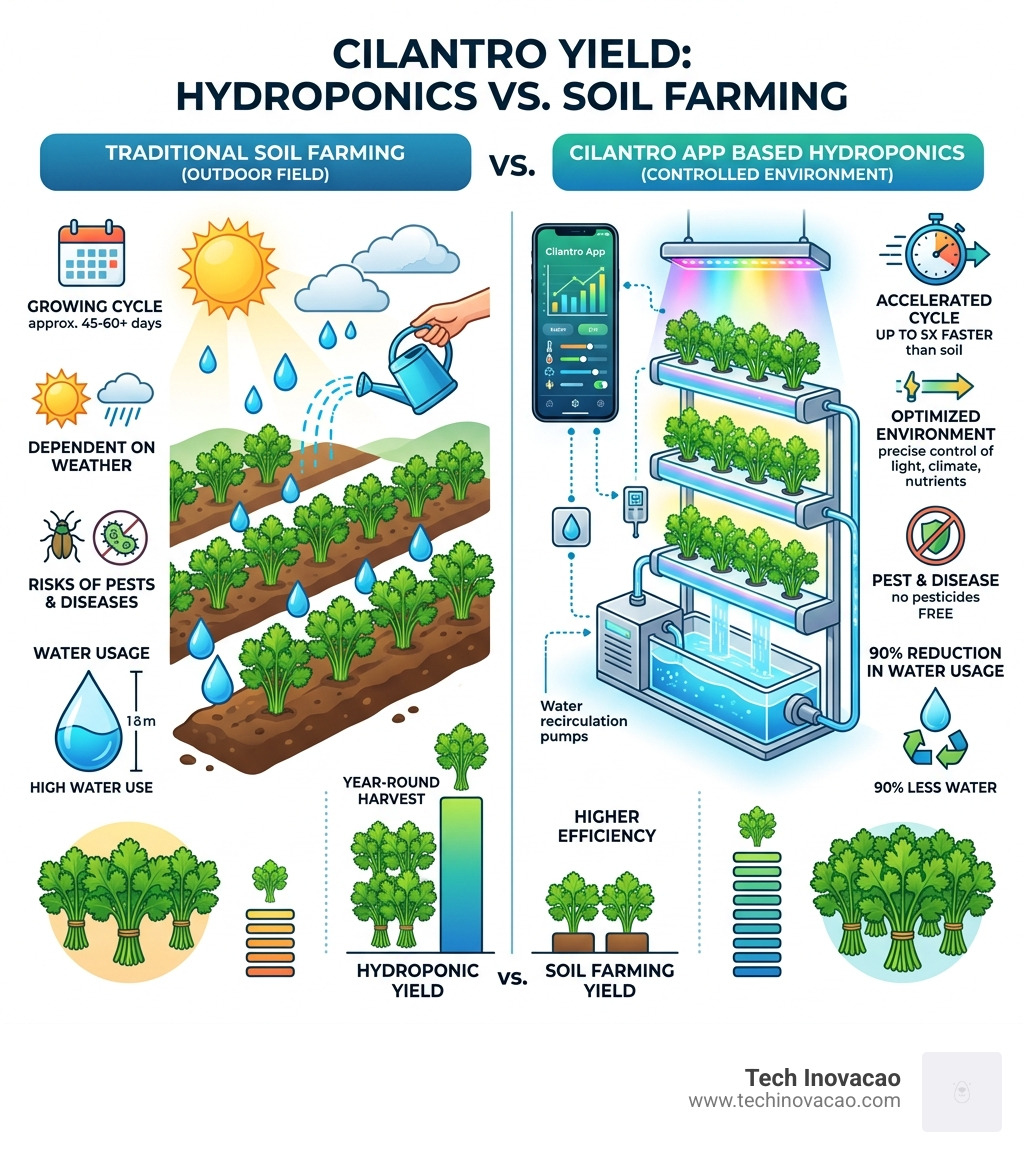
This level of sustainability is achieved through a 90% reduction in water usage compared to field farming. Because the water is recirculated in a closed-loop system, none of it is wasted. This enables 365-day production regardless of the weather outside, making it a cornerstone for future urban agriculture.
From Home Smart Gardens to Industrial Vertical Farms
You don’t need a shipping container to enjoy the benefits of cilantro app based hydroponics. The technology has been successfully shrunk down into compact kitchen units that fit right next to your toaster. These home systems often feature full-spectrum LED lighting that mimics natural sunlight, leading to growth rates up to 5x faster than soil-based gardening.
| Feature | Home Smart Garden | Industrial Vertical Farm |
|---|---|---|
| Setup Time | 10–15 minutes | Several weeks |
| Maintenance | Refill every 9–15 days | Daily sensor checks |
| Water System | Passive or small pump | Gravity-fed NFT or DWC |
| Lighting | Integrated LEDs | High-output LED arrays |
For students and hobbyists, these systems provide a fantastic platform for experiential learning. You get to see the direct relationship between nutrient levels and plant health. Most home systems utilize an “open seed” approach, meaning you aren’t locked into proprietary pods; you can use high-quality organic cilantro seeds and watch them thrive in a nutrient-rich, soil-free environment.
Essential App Features for Hydroponic Success
What actually happens inside the app? It’s more than just a timer. A robust cilantro app based hydroponics interface serves as a digital dashboard for your plant’s life.
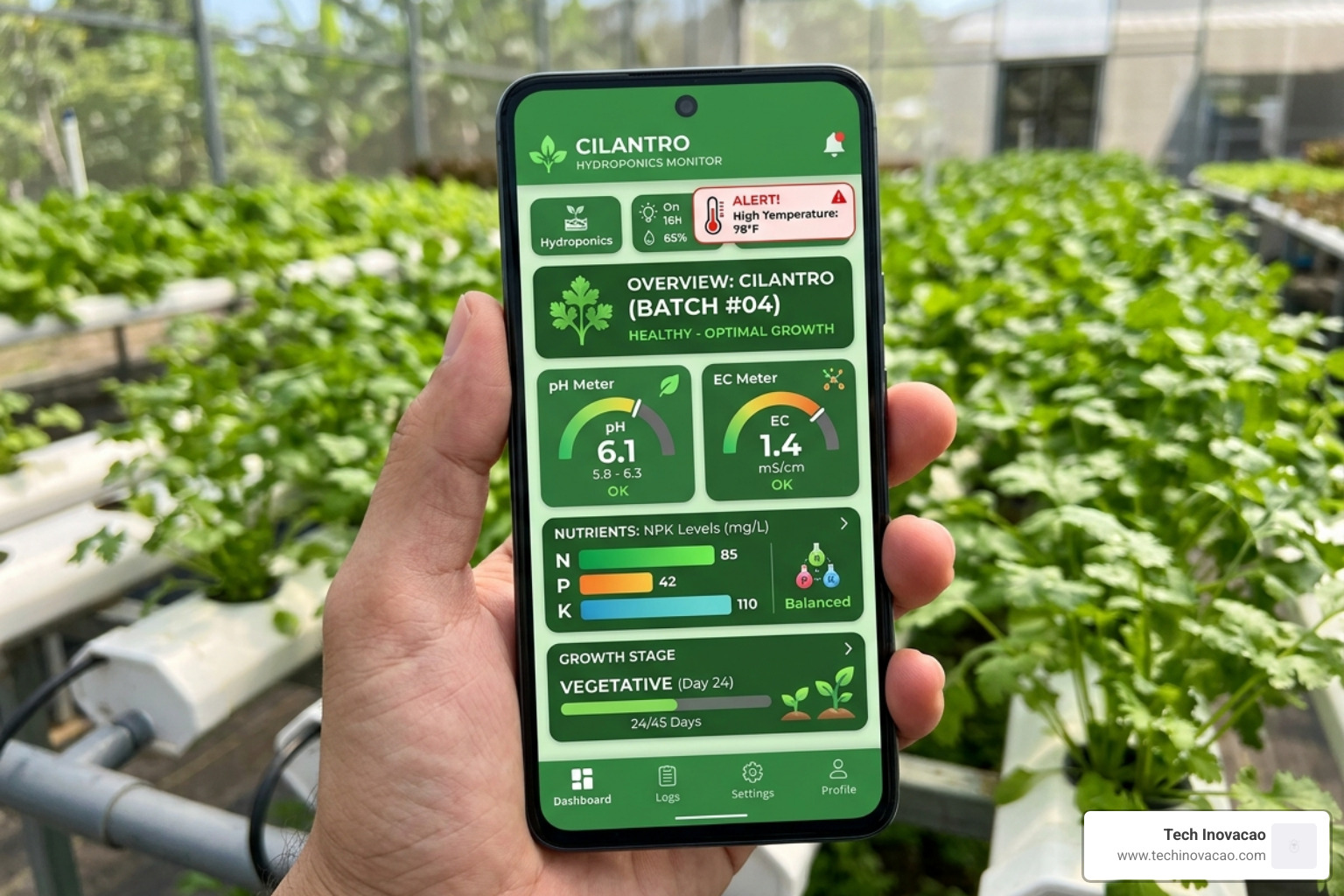
- Temperature Alerts: Cilantro prefers cooler temperatures (65-75°F). If your grow room gets too hot, the app pings your phone so you can adjust the AC or fans before the plant bolts.
- Flow Rate Automation: Scientific studies on physiological impacts of salinity stress show that flow rates between 1.0 and 4.0 L min⁻¹ are ideal for nutrient uptake. The app can control the pump speed to match the plant’s growth stage.
- Nutrient Refill Reminders: No more guessing if the water is “low.” The app tracks consumption and tells you exactly when to add more A&B nutrient solution.
- Harvest Timers: The app tracks the age of your plants, reminding you when they’ve hit that 6-8 inch “sweet spot” for the most flavorful harvest.
Frequently Asked Questions about Hydroponic Cilantro
Why are my cilantro leaves turning yellow?
Yellowing leaves, or chlorosis, are usually a cry for help regarding nutrients. In a hydroponic setup, this is often caused by a nitrogen deficiency or an off-balance pH level. If your pH drifts outside the 5.5–6.5 range, the cilantro can’t “unlock” the nutrients in the water. Use your app to check the pH and EC levels immediately. Other culprits include excessive watering (leading to root rot) or the early stages of a pest infestation like aphids.
How long does it take to harvest cilantro in a smart system?
One of the best things about cilantro app based hydroponics is the speed. Germination usually takes 7-10 days. From there, you can reach full maturity in just 40-50 days. However, you don’t have to wait that long! Once the plants reach about 6 inches in height, you can start a “cut-and-come-again” harvest, taking the outer leaves and allowing the center to keep growing.
Can cilantro tolerate salty or brackish water?
Yes, to an extent. As mentioned earlier, cilantro can handle salinity up to 3.0 dS m⁻¹ without much trouble. If the salinity climbs higher (towards 4.5 dS m⁻¹), the plant will still look green and healthy (retaining chlorophyll), but it will grow much slower because its internal gas exchange is compromised. App-based systems help mitigate this by allowing you to dilute the solution the moment the EC sensors detect a rise in salt concentration.
Conclusion
The future of herb gardening is undoubtedly digital. As we move further into 2026, innovations like AI-driven salinity adjustments and fully remote farm management are becoming the standard. We are no longer at the mercy of the seasons or poor soil quality.
With cilantro app based hydroponics, anyone from a college student in a dorm to a commercial farmer in a city center can produce world-class, pesticide-free herbs. At Tech Inovacao, we are proud to be at the forefront of this movement, making professional-grade hydroponic technology accessible to everyone.
Ready to start your own soil-free journey? Discover more about our smart hydroponic services and bring the garden of the future into your home today. Happy growing!
