
How to Create a DIY Hydroponic Nutrient Solution from Scratch
Why Your Plants Need a Proper DIY Hydroponic Nutrient Solution
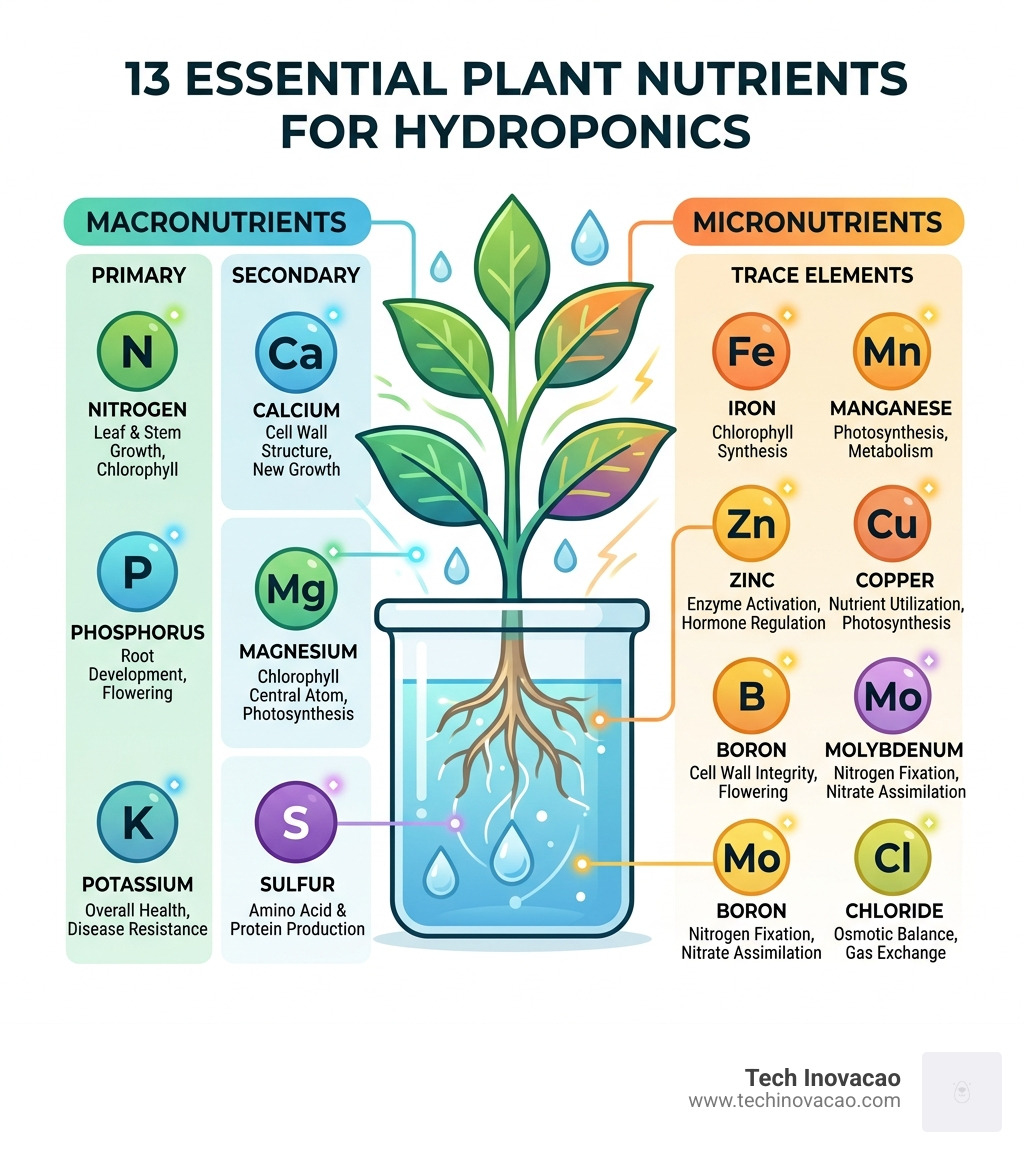
A diy hydroponic nutrient solution is a custom-mixed, water-based fertilizer that delivers all the minerals your plants need to grow — without any soil. Here’s a quick overview of what goes into one:
Essential ingredients for a basic DIY hydroponic nutrient solution:
- Calcium Nitrate — primary nitrogen and calcium source
- Magnesium Sulfate (Epsom salt) — supplies magnesium and sulfur
- Potassium Nitrate — adds potassium and more nitrogen
- Monopotassium Phosphate — provides phosphorus and potassium
- Chelated Trace Elements — covers iron, manganese, zinc, copper, boron, and molybdenum
Key targets to hit:
- pH: 5.5–6.5
- EC: 1.2–2.5 mS/cm depending on crop and growth stage
- Base water TDS: below 150 ppm (use RO or distilled water)
In a hydroponic system, water is the soil. There’s no growing medium to buffer nutrients or correct mistakes. That means every mineral your plant absorbs has to come directly from the solution you mix.
The good news? Mixing your own is simpler than it sounds — and significantly cheaper. A homemade A+B nutrient concentrate can cost around $25 per gallon pair, which is less than one-third the price of many commercial options. A single 250 mL batch of concentrate can produce up to 62.5 liters of ready-to-use solution.
Whether you’re growing lettuce on a kitchen shelf or tomatoes in a spare room, understanding what goes into your nutrient mix puts you in full control of your harvest.
Why Switch to a DIY Hydroponic Nutrient Solution?
In the current landscape of April 2026, home gardening has evolved from a hobby into a necessity for many of us looking for fresh, clean produce. While buying pre-mixed bottles is convenient, it often feels like you are paying more for the plastic bottle and the water inside than the actual minerals. By switching to a diy hydroponic nutrient solution, you take the “middleman” out of your garden’s nutrition.
The most compelling reason is the sheer cost efficiency. Based on industry data, preparing your own A+B generic nutrients costs approximately $25 USD for a gallon of Part A and a gallon of Part B. Compare this to commercial premium series, which can easily exceed $80 for the same volume. That is a massive saving of over 60%!
Beyond the wallet, DIY mixing offers unmatched transparency. When we mix our own salts, we know exactly what our plants are eating. There are no mysterious “proprietary additives” or fillers. This reduced chemical exposure leads to a more sustainable garden and, arguably, better-tasting herbs and vegetables.
| Feature | Commercial Pre-Mixed | DIY Nutrient Solution |
|---|---|---|
| Cost per Gallon (A+B) | $75 – $90+ | ~$25 |
| Concentration Factor | Fixed (usually 250:1) | Customizable |
| Control over N-P-K | Limited to bottle ratios | Fully adjustable by stage |
| Shelf Life | 1-2 Years | 2+ Years (Dry Salts) |
| Purity | Varies by brand | High (if using Greenhouse Grade) |
Customization is the “secret sauce” of expert growers. Different plants have different appetites. A head of lettuce wants plenty of nitrogen for leafy growth, while a tomato plant in full bloom craves phosphorus and potassium. With a DIY approach, you can tweak your formula to match the specific growth stage of your crop. For more on the foundational benefits of home-mixing, you can explore How to DIY Hydroponic Nutrients at Home – Smart Garden and Home.
Essential Tools and Raw Salts for Home Mixing
To get started, we need to treat our kitchen or garage like a mini-laboratory. Precision is the name of the game here. Because we are working with concentrated salts, being off by just a few grams can mean the difference between a thriving garden and “nutrient burn.”
The Tool Kit:
- Digital Scale: You need a scale with 0.01g accuracy. Standard kitchen scales usually only measure to the nearest gram, which isn’t precise enough for micronutrients.
- EC Meter: This measures Electrical Conductivity, telling you exactly how “strong” your water is.
- pH Tester: Essential for ensuring your plants can actually “unlock” and absorb the nutrients.
- Volumetric Flask or Graduated Beaker: For measuring liquid volumes accurately.
- Airtight Storage: Glass or opaque plastic containers to keep your concentrates away from light and air.
Sourcing Ingredients for Your DIY Hydroponic Nutrient Solution
You cannot just use any fertilizer from the local hardware store. Most “soil” fertilizers contain urea or ammoniacal nitrogen, which can become toxic in a water-only environment or cause massive pH swings. We need water-soluble, greenhouse-grade raw salts.
The “Big Five” salts you will need include:
- Calcium Nitrate: The backbone of Part A.
- Magnesium Sulfate: Commonly known as Epsom Salt (ensure it is pure, with no scents or additives).
- Potassium Nitrate: Provides essential K and N.
- Monopotassium Phosphate (MKP): The primary source of phosphorus.
- Potassium Sulfate: Used to round out potassium levels without adding extra nitrogen.
- Chelated Trace Elements: A pre-mixed “micro” blend is often best for beginners to ensure you get the right ratios of Iron, Boron, and Zinc without having to buy ten different tiny bags of powder.
When sourcing, always look for “Hydroponic Grade” or “Greenhouse Grade” to ensure high solubility. Low-purity salts can leave a cloudy residue or “sludge” at the bottom of your tank, which can clog pumps and emitters. For a deeper look at the chemistry behind these ingredients, check out How To Make Your Own Hydroponics Nutrients.
The A+B Method: Mixing Your Homemade Nutrients
One of the most common questions we hear is: “Why can’t I just mix everything into one big bottle of concentrate?” The answer is a bit of chemistry called precipitation.
If you mix concentrated Calcium Nitrate (Part A) directly with concentrated Sulfates or Phosphates (Part B), they will chemically react to form Calcium Sulfate (gypsum). This is essentially plaster—it’s insoluble, meaning your plants can’t eat it, and it will turn your solution into a cloudy mess that clogs every tube in your system.
By creating two separate stock concentrates—Solution A and Solution B—we keep the “feuding” minerals apart until they are diluted in a large volume of water where they can coexist peacefully.
Step-by-Step Guide: Mixing Your DIY Hydroponic Nutrient Solution
Let’s walk through the process of creating a 250mL concentrate batch (which uses a 250:1 concentration factor).
- Prep Your Water: Start with distilled or Reverse Osmosis (RO) water. Heat a small portion of it (about 150mL) to roughly 100°F (40°C). Warm water helps the salts dissolve much faster.
- Weigh and Dissolve Part A: Weigh your Calcium Nitrate and any Iron chelates. Add them to the water one by one. Rule #1: Never add the next salt until the previous one is completely dissolved. Stir until the water is crystal clear.
- Weigh and Dissolve Part B: In a separate container, dissolve your Magnesium Sulfate, Potassium Nitrate, and Monopotassium Phosphate. Again, stir thoroughly.
- Top Off: Once dissolved, add enough room-temperature distilled water to each container to reach exactly 250mL.
- Homogenize: Give them a final shake or stir. You now have high-quality concentrates!
When it’s time to feed your plants, the standard ratio is often 15mL of Solution A and 15mL of Solution B per gallon of water. Always add Solution A to your reservoir first, stir well, and then add Solution B. For a specific recipe focused on fruiting vegetables like peppers or cucumbers, refer to DIY Hydroponic Nutrient Solution at Home | Hydroponic Fertilizers for Fruiting Vegetables Recipe – 𝐒𝐌𝐠𝐚𝐫𝐝𝐞𝐧𝐞𝐫.
Customizing Formulas for Different Growth Stages
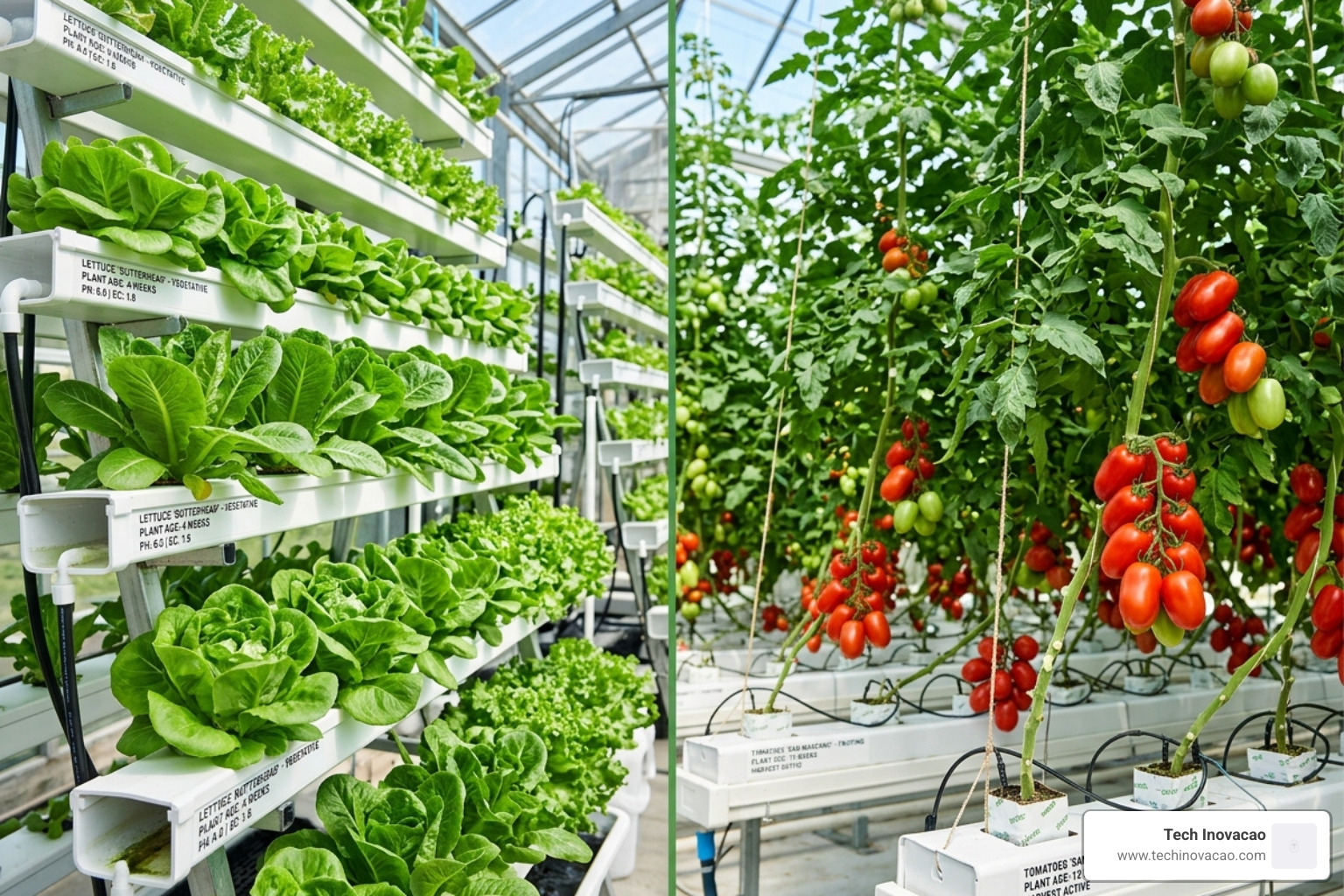
Plants are like athletes; their nutritional needs change depending on whether they are “training” (vegetative growth) or “competing” (flowering and fruiting).
Vegetative vs Fruiting DIY Hydroponic Nutrient Solution Ratios
The Vegetative Stage (Leafy Greens & Herbs): In this stage, we want lush, green canopy growth. This requires higher Nitrogen (N).
- Target EC: 1.2 – 1.8 mS/cm.
- Recipe Tip: Use a formula similar to the Hoagland Solution, a gold-standard benchmark in plant science. For 1 US gallon of final solution, a common vegetative mix uses:
- 6.00g Calcium Nitrate
- 2.09g Potassium Nitrate
- 2.42g Magnesium Sulfate
The Flowering/Fruiting Stage (Tomatoes, Peppers, Strawberries): Once the plant starts producing flowers, it needs less Nitrogen and significantly more Phosphorus (P) and Potassium (K) to develop healthy fruits.
- Target EC: 2.0 – 4.0 mS/cm (Tomatoes are heavy feeders!).
- Recipe Tip: Increase the Monopotassium Phosphate and Potassium Sulfate. This supports the energy-intensive process of fruit production and improves flavor.
For those just starting, a “Modified Sonneveld” solution is an excellent middle ground that works well for a variety of herbs. You can find detailed breakdowns of these ratios at Hydroponic Nutrients Solution Recipe: DIY Homemade Hydroponic Fertilizer.
Monitoring and Troubleshooting Your Solution
Even the best diy hydroponic nutrient solution needs regular check-ups. Think of yourself as a doctor for your plants.
The pH Factor: The pH of your solution (how acidic or alkaline it is) acts as the “gatekeeper.” If the pH is too high (above 7.0), minerals like Iron and Manganese get “locked out”—they are in the water, but the plant’s roots can’t grab them.
- Ideal Range: 5.5 to 6.5.
- Adjustment: Use “pH Down” (usually phosphoric acid) or “pH Up” (potassium hydroxide) to make small, gradual corrections.
Electrical Conductivity (EC): EC measures the concentration of salts. If the EC is too high, the water can actually be pulled out of the plant via osmosis, causing “tip burn” or wilting. If it’s too low, the plant will grow slowly and look pale.
- Lettuce: 1.4-1.8 mS/cm
- Tomatoes: 2.0-4.0 mS/cm
- Cucumber: 1.7-2.0 mS/cm
Common Deficiency Signs:
- Yellowing Leaves (Chlorosis): Often a sign of Nitrogen or Iron deficiency. Check your pH first!
- Blossom End Rot: A classic sign of Calcium deficiency in tomatoes, often caused by inconsistent watering or low Calcium Nitrate in your mix.
- Purple Stems/Leaves: Can indicate a Phosphorus deficiency, especially in cooler temperatures.

Frequently Asked Questions about DIY Nutrients
Can I use regular garden fertilizer for hydroponics?
We strongly advise against it. Regular garden fertilizers often contain insoluble fillers and urea-based nitrogen. In soil, microbes break down urea into a form plants can use. In a sterile hydroponic system, those microbes aren’t there, and the urea can sit in the water and become toxic to the roots. Stick to water-soluble nitrate-based salts.
How often should I change my DIY nutrient solution?
As plants drink, they don’t take up nutrients and water at the same rate. Over time, the balance of minerals in your reservoir will become “skewed.” A good rule of thumb is to refresh your reservoir every 10 to 14 days. If you find yourself topping up the water volume by 100% (e.g., adding 5 gallons of water to a 5-gallon tank over a week), it’s time for a full change.
Does water quality affect my homemade nutrient mix?
Absolutely. If your tap water has a high TDS (Total Dissolved Solids) over 150 ppm, it already contains “hidden” minerals like calcium carbonate or sodium. These can interfere with your recipe and cause pH instability. For the most predictable results, use Reverse Osmosis (RO) or distilled water as your base.
Conclusion
Mastering the diy hydroponic nutrient solution is the ultimate step toward gardening self-reliance. It transforms you from a consumer into a creator, giving you the power to dial in the exact nutrition your plants need for maximum flavor and yield. While the chemistry might seem daunting at first, the process of weighing, dissolving, and monitoring becomes a rewarding ritual once you see the vibrant results in your grow room.
At Tech Inovacao, we believe that everyone should have access to fresh, healthy food. Our hydroponic herb growing systems are designed to make this journey effortless, bringing the garden directly to your fingertips. By combining our easy-to-use hardware with your newfound knowledge of precision nutrition, you can enjoy a continuous harvest of soil-free, high-quality herbs all year round.
Ready to take your indoor garden to the next level? Learn more about our hydroponic herb systems and start your journey toward a more sustainable, self-sufficient lifestyle today!
