
Mixing Your Own Soil-Free Nutrient Solution Without the Chemistry Degree
Why Your Plants Live or Die by Their Nutrient Solution for Hydroponics
A nutrient solution for hydroponics is the water-based liquid that delivers every mineral your plants need to grow — replacing the role that soil plays in traditional gardening.
Quick answer: How to mix a basic hydroponic nutrient solution
- Start with clean water (distilled or reverse osmosis is best)
- Add a calcium nitrate solution separately from phosphates and sulfates
- Mix in magnesium sulfate and potassium nitrate
- Add chelated micronutrients (iron, manganese, etc.)
- Adjust pH to between 5.5 and 6.5
- Check electrical conductivity (EC) — target 1.2–2.5 mS/cm depending on your crop
- Top up or refresh every 1–2 weeks
Here’s the thing most beginner growers don’t realize: in hydroponics, the water is everything. There’s no soil acting as a buffer. No microbes slowly breaking down organic matter. Your plants rely 100% on what you put in the reservoir.
That sounds intimidating — like you need a chemistry degree just to grow some basil on your kitchen counter.
You don’t.
With a few affordable salts, a basic pH meter, and a simple formula, you can mix a nutrient solution that outperforms many store-bought options — and costs 30–50% less over time.
This guide is built for busy people who want fresh herbs at home without a science lab. We’ll keep the chemistry simple and the steps practical.
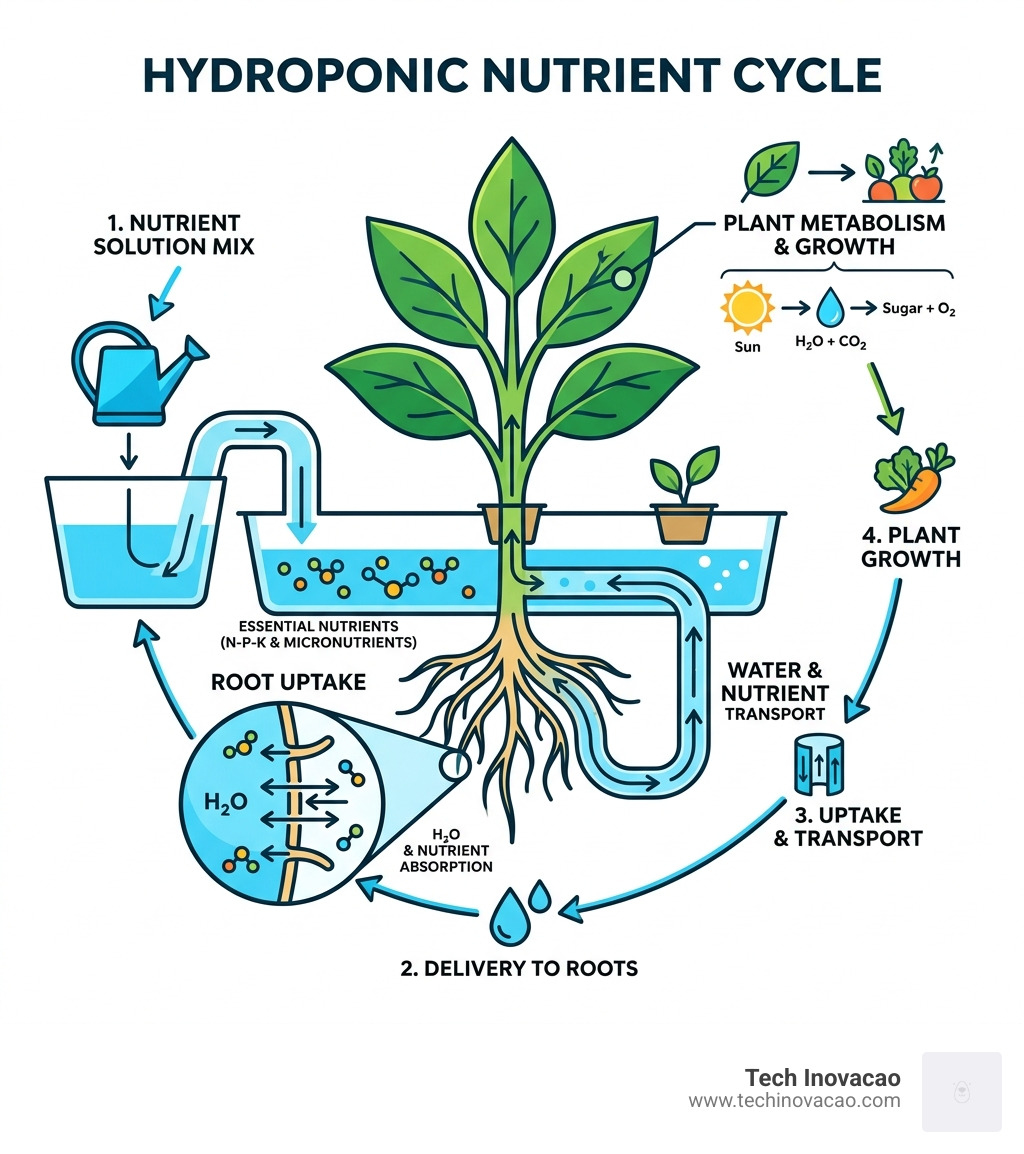
The Fundamentals of a Nutrient Solution for Hydroponics
To understand a nutrient solution for hydroponics, we first have to think like a plant. In a traditional garden, roots go “hunting” for minerals trapped in soil particles. In our Tech Inovacao systems, we bring the buffet directly to the roots.
For the solution to be effective, it must be highly soluble. If a fertilizer doesn’t dissolve completely, it sinks to the bottom of your tank like sludge, making it useless to your herbs and potentially clogging your pumps. This is why we always recommend greenhouse-grade fertilizers. These are refined to a higher purity than standard garden-store spikes, ensuring every gram of mineral is available for uptake.
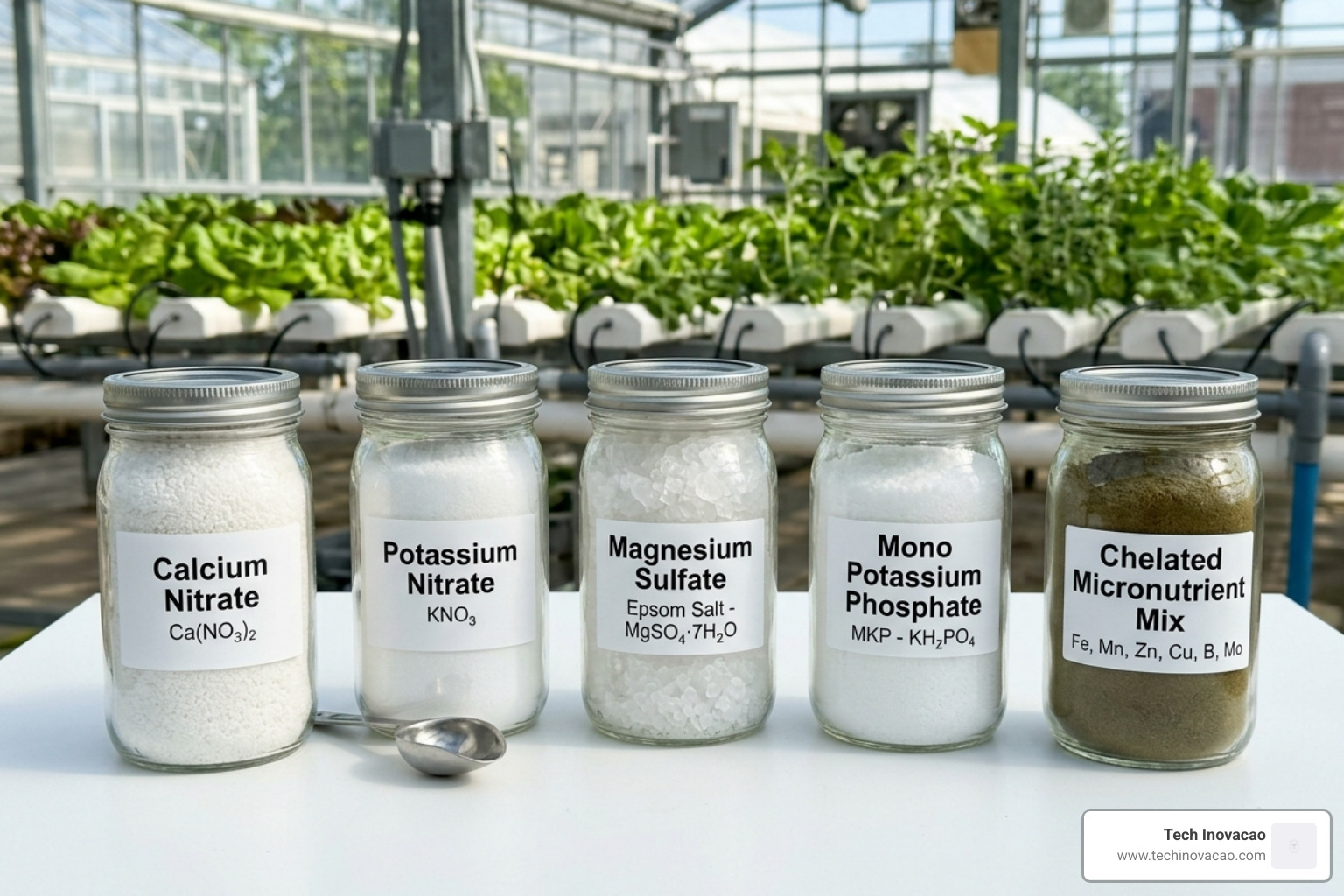
Essential Elements in a Nutrient Solution for Hydroponics
Plants are picky eaters. They require a specific “menu” of sixteen essential elements, divided into macronutrients (the big stuff) and micronutrients (the vitamins).
- Nitrogen (N): The engine of leaf growth. Without enough N, your basil will look pale and tired.
- Phosphorus (P): Critical for root development and eventually flowering.
- Potassium (K): Think of this as the plant’s immune system and “circulatory” regulator.
- Calcium (Ca) & Magnesium (Mg): These are often overlooked but vital. Calcium builds strong cell walls (preventing “floppy” herbs), while Magnesium is the core of the chlorophyll molecule.
- Chelated Iron: Iron is notorious for “locking out” or becoming unavailable if the pH shifts. We use “chelated” iron because it’s wrapped in a molecule that keeps it soluble even when conditions aren’t perfect.
Role of Supplements and Additives
While a base nutrient solution for hydroponics provides the essentials, supplements act like “superfoods.”
- Bloom Boosters: High-phosphorus formulas (like the popular 1-34-32 ratios) are used when you want to trigger heavy flowering or fruiting.
- Humic Acid: Often derived from leonardite, this helps the roots “grab” nutrients more efficiently.
- Surfactants: These are “wetting agents” that break the surface tension of water, ensuring the nutrient solution coats the roots evenly.
- Mycorrhizae: Beneficial fungi that form a symbiotic relationship with roots, drastically increasing the surface area for nutrient absorption.
Recent 2026 yield statistics indicate that growers who utilize stage-specific additives can see a significant increase in biomass compared to those using a “one-size-fits-all” feeding program.
Comparing Commercial Systems and DIY Recipes
When you start looking for a nutrient solution for hydroponics, you’ll be met with thousands of options. Major online retailers list thousands of products, ranging from the classic three-part liquids to modern powdered kits.
| System Type | Best For | Pros | Cons |
|---|---|---|---|
| One-Part | Beginners | Extremely easy; just pour and go. | Less control; can settle over time. |
| Two-Part (A&B) | Intermediate | Prevents nutrient lockout; very stable. | Requires two separate measurements. |
| Three-Part | Advanced | Ultimate customization for growth stages. | Steeper learning curve; more storage. |
| DIY Salts | Pro/Economical | 30–50% cheaper; total control. | Requires a precision scale and time. |
Step-by-Step Mixing of a Nutrient Solution for Hydroponics
Mixing your own solution isn’t just about saving money; it’s about quality control. Here is how we do it:
- Water First: Always start with clean water. If your tap water is “hard” (full of minerals), it can mess up your ratios. Reverse Osmosis (RO) water is the gold standard.
- The “Never-Mix” Rule: Never mix concentrated Calcium Nitrate with concentrated Sulfates or Phosphates in their dry form or in a small amount of water. They will react to form gypsum (basically drywall), which will precipitate out and never dissolve.
- The Order Matters:
- Fill your reservoir with the total amount of water needed.
- Add your Micro-nutrients first.
- Add your Macro-nutrients (Potassium Nitrate, etc.).
- Add Calcium Nitrate last.
- Agitation: Use a pump or a simple stir stick to ensure everything is fully dissolved before adding the next salt.
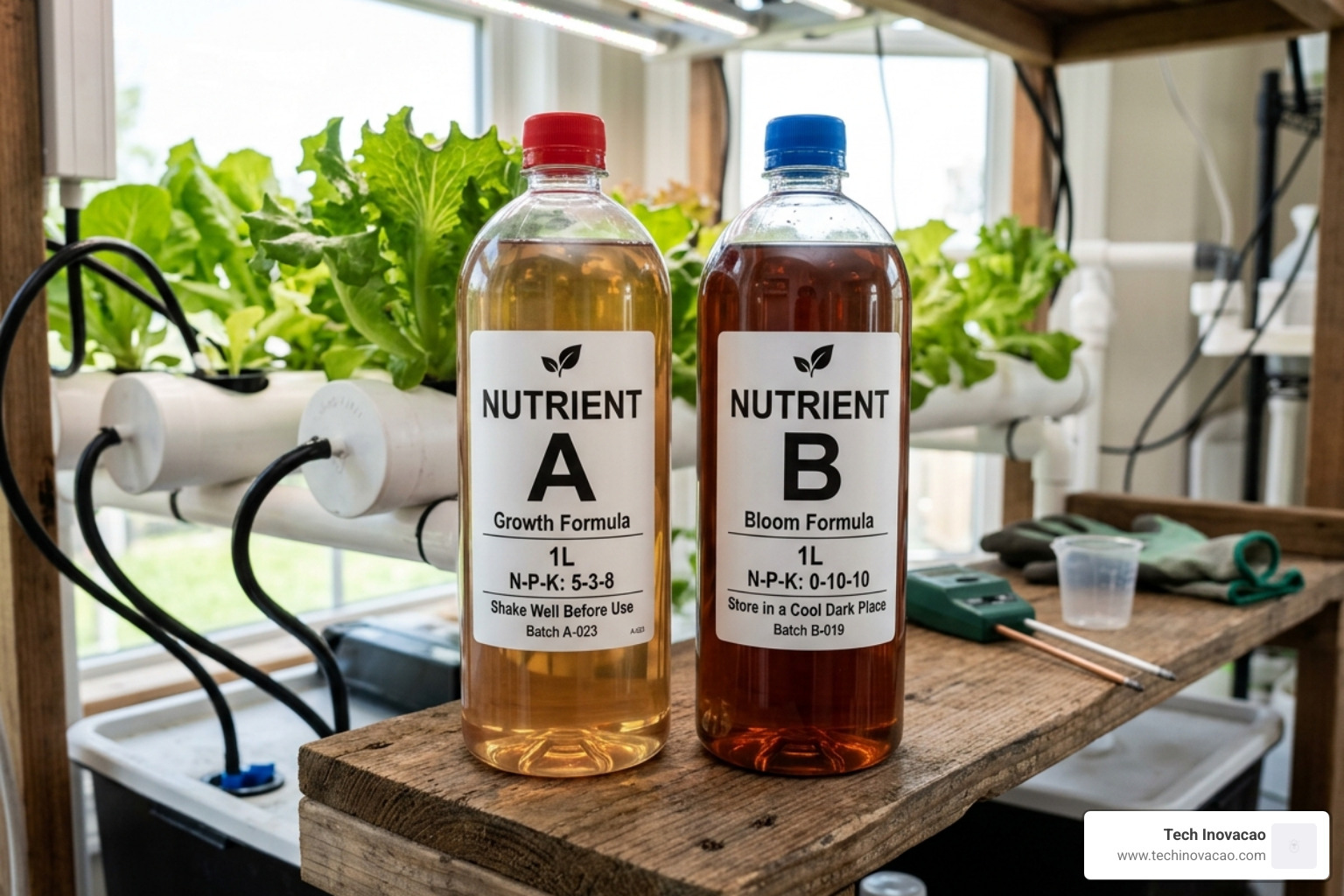
Advantages of Multi-Part Nutrient Systems
Why do professional nutrient manufacturers insist on multiple bottles? It’s all about chemical compatibility. By keeping Calcium in “Bottle A” and Phosphates/Sulfates in “Bottle B,” manufacturers ensure the nutrients stay in a liquid state until they are diluted in your main reservoir.
Modern 2026 formulations have also introduced advanced pH-buffering technologies. These use specialized molecules that automatically keep the solution in the “sweet spot” for absorption, even if your source water is slightly alkaline. For many Tech Inovacao users, this automation is the key to effortless herb gardening.
Precision Management: pH, EC, and Water Quality
If the nutrients are the food, pH and EC are the “fork and knife” that allow the plant to eat.
Impact of Water Source on Solution Strength
Your water source is the foundation of your nutrient solution for hydroponics.
- Tap Water: Often contains chlorine and minerals like calcium. If you use tap, let it sit out for 24 hours to allow chlorine to evaporate, or use a filter.
- RO/Distilled Water: This is a “blank slate.” It has 0 ppm (parts per million), meaning every bit of “strength” in the water comes from the nutrients you specifically added.
Maintaining the Ideal Chemical Balance
- pH (Potential Hydrogen): Most hydroponic plants prefer a pH between 5.5 and 6.5. If the pH climbs above 6.5, iron becomes “locked out,” and your leaves will turn yellow. If it drops too low, you risk calcium toxicity.
- EC (Electrical Conductivity): This measures how “salty” or concentrated your water is. Think of it as the “strength” of the soup.
- Seedlings: 0.8–1.2 mS/cm
- Leafy Greens/Herbs: 1.2–1.8 mS/cm
- Fruiting Plants (Tomatoes): 2.0–2.5 mS/cm
Monitoring these in real-time is much easier in 2026 than it used to be. Simple handheld pens provide instant readings, allowing you to add a few drops of “pH Down” (usually phosphoric acid) to keep things perfect.
Optimizing Growth Stages and Troubleshooting
Your herbs are living organisms that change their “diet” as they age. A seedling doesn’t want the same heavy meal that a flowering mint plant needs.
Diagnosing Common Nutrient Deficiencies and Toxicities
Even with the best nutrient solution for hydroponics, things can go sideways. Here is your “cheat sheet” for 2026:
- Yellowing between leaf veins (Iron Chlorosis): Usually a pH issue. Check if your pH is above 6.5.
- Brown, “burnt” leaf tips (Tip Burn): Often caused by an EC that is too high (overfeeding) or a lack of airflow preventing calcium from reaching the leaves.
- Curling, dark green leaves (Nitrogen Toxicity): You’re giving them too much “Grow” formula. Dilute the solution with fresh water.
- Blossom End Rot: A classic sign of Calcium deficiency, often seen in fruiting crops like peppers or tomatoes.
Refreshing and Changing the Reservoir
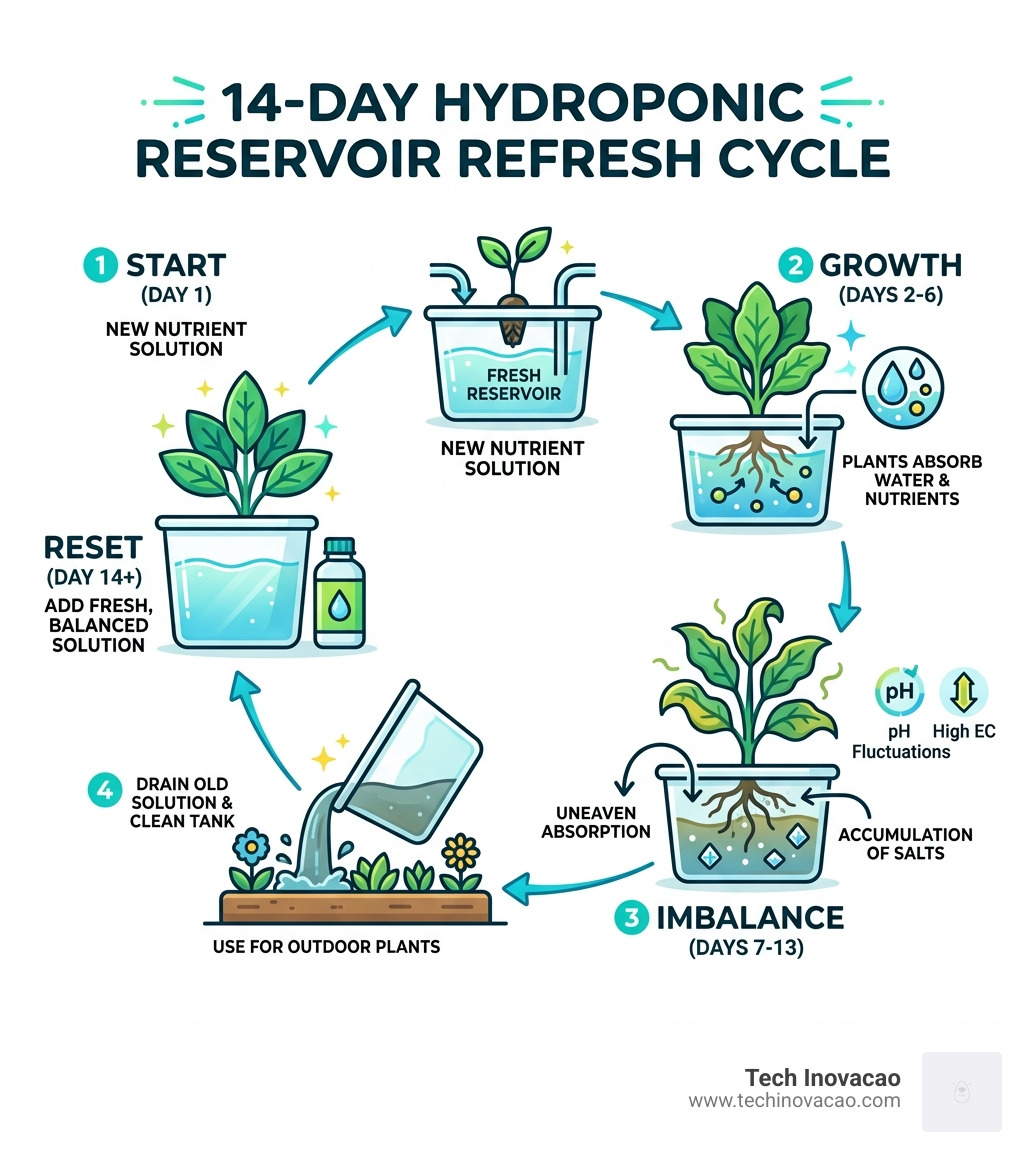
You can’t just keep “topping up” the water forever. Plants drink water and eat nutrients at different rates. Over a week or two, the balance of minerals in the tank gets “wonky.”
We recommend a full reservoir change every 7 to 14 days. This flushes out any accumulated salts that the plant didn’t want and provides a fresh, balanced “buffet.” When you dump the old solution, don’t just pour it down the drain — it’s fantastic for your outdoor flower beds or lawn!
Frequently Asked Questions about Hydroponic Nutrients
How often should I completely replace my nutrient solution?
As a rule of thumb, every 2 weeks. However, if you notice your pH is swinging wildly every day or your EC is rising while the water level drops, it’s time for a fresh batch.
Can I use organic fertilizers in a hydroponic system?
Yes, but be careful. Organic nutrients (like fish emulsion) are often thick and contain particles that can clog the small tubes in a Tech Inovacao system. Look for “hydro-organic” certified liquids that are filtered for soil-free use.
What is the difference between EC and PPM?
They both measure the same thing: salt concentration. EC (Electrical Conductivity) is a universal scientific measurement. PPM (Parts Per Million) is a calculation based on the EC. Because different meters use different conversion factors (500 scale vs 700 scale), EC is the more reliable measurement to use when following recipes.
Conclusion
At Tech Inovacao, we believe that everyone should have access to fresh, vibrant herbs without needing a backyard or a degree in agricultural science. Mastering the nutrient solution for hydroponics is the final “secret” that separates the casual grower from the master indoor gardener.
By understanding the N-P-K basics, keeping an eye on your pH, and refreshing your reservoir regularly, you create an environment where plants don’t just survive — they thrive. Whether you are using a professional three-part system or mixing your own salts to save costs, the result is the same: delicious, nutrient-dense herbs at your fingertips.
Ready to start your soil-free journey? Explore our hydroponic herb systems and see how easy home cultivation can be in 2026. Remember to store your nutrients in a cool, dark place, handle them with care, and always mix with love!
