
DIY Hydroponic Nutrients: How to Feed Your Plants on a Budget
Why Making Your Own Hydroponic Nutrient Solution Can Save You Money and Boost Your Harvest
A hydroponic nutrient solution diy is simply water mixed with specific mineral salts that replace the nutrients plants would normally get from soil. Instead of buying expensive pre-mixed bottles, you dissolve a handful of affordable salts into clean water — and your plants get everything they need to thrive.
Here’s the quick answer for how to make a basic DIY hydroponic nutrient solution:
- Start with distilled or reverse osmosis (RO) water
- Mix Solution A: 5g Calcium Nitrate per gallon of water
- Mix Solution B separately: 2g Magnesium Sulfate + 1g Monopotassium Phosphate + 2g Potassium Nitrate per gallon
- Add 0.5–1g of chelated micronutrients per gallon
- Combine A and B, then adjust pH to 5.5–6.5
- Check EC (electrical conductivity) — aim for 1.2–2.5 mS/cm depending on your crop
DIY nutrient mixes can cost 30–50% less than commercial solutions over time, with some growers reporting savings of 3–5x compared to pre-mixed brands.
If you’re growing herbs on a kitchen counter or salad greens under a grow light, you already know the frustration: commercial hydroponic nutrients are pricey, confusing, and often overkill for a small setup.
The good news? Feeding hydroponic plants is actually straightforward once you understand what goes into the water. The basic ingredients are widely available, the process takes less than 15 minutes, and the cost drops dramatically when you mix your own.
This guide walks you through everything — from the salts you need to the exact steps for mixing, testing, and maintaining your solution — so you can grow confidently without overspending.
Understanding the Basics of a Hydroponic Nutrient Solution DIY
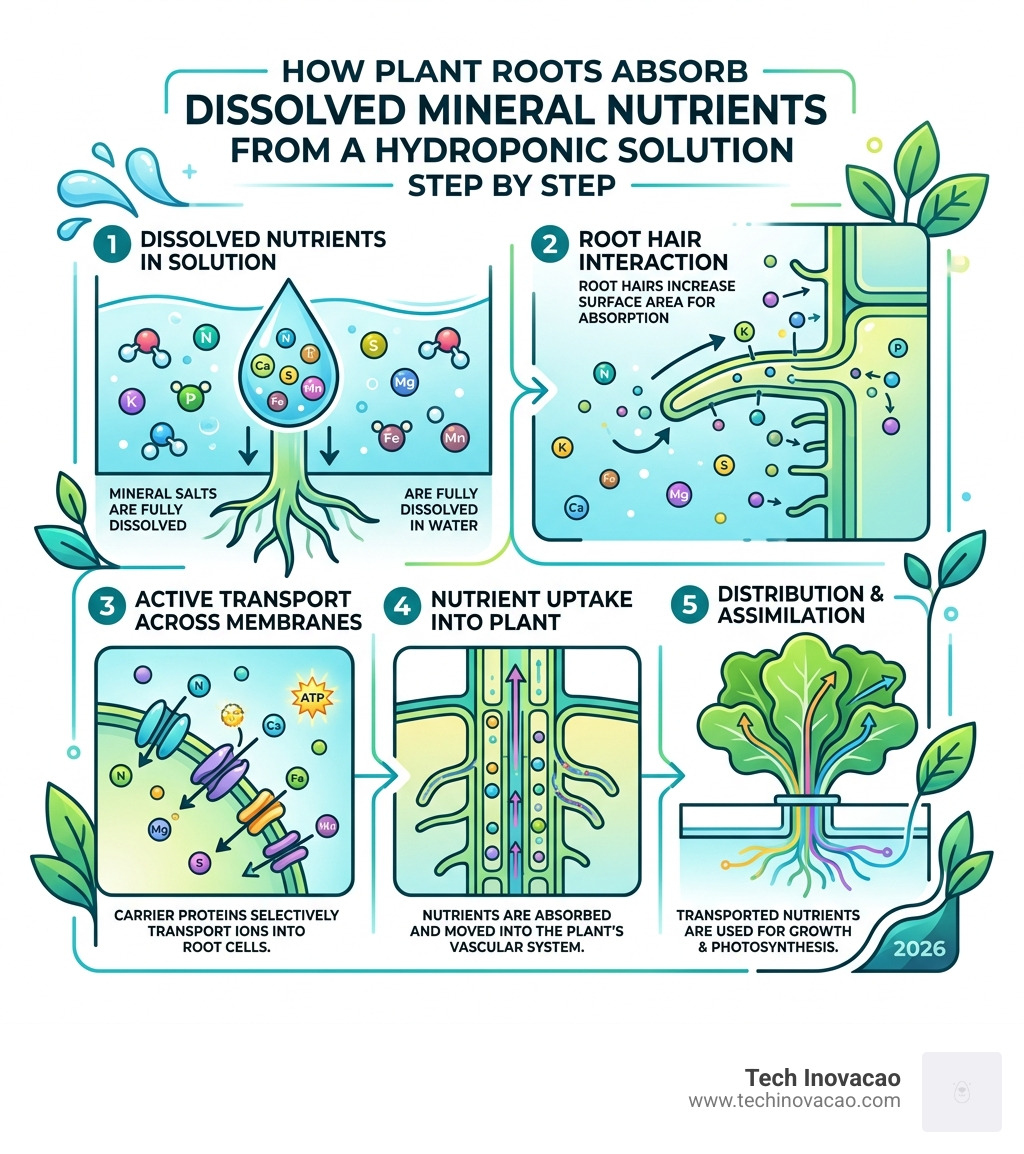
To successfully mix a hydroponic nutrient solution diy, we first need to understand what we are trying to replicate. In a traditional garden, soil acts as a reservoir for minerals. In hydroponics, we are the reservoir. We must provide 13 essential elements that plants usually forage for in the dirt.
These are divided into three categories:
- Primary Macronutrients: Nitrogen (N), Phosphorus (P), and Potassium (K). These are the “Big Three” you see on every fertilizer bag.
- Secondary Macronutrients: Calcium (Ca), Magnesium (Mg), and Sulfur (S). These are often overlooked but critical for structural integrity and chlorophyll production.
- Micronutrients: Iron (Fe), Manganese (Mn), Zinc (Zn), Boron (B), Copper (Cu), Molybdenum (Mo), and Chlorine (Cl). Plants only need a “pinch” of these, but without them, the whole system collapses.
The science of DIY Hydroponic Nutrients revolves around bioavailability. We can’t just throw a rusty nail into the water and call it “iron.” The nutrients must be in a water-soluble form that the roots can drink immediately. This is why we use specific mineral salts—like Calcium Nitrate or Magnesium Sulfate (Epsom salt)—which dissolve completely and release their ions into the water.
One of the most important components we use is chelated micronutrients. Chelation is a fancy way of saying the mineral is “wrapped” in a molecule that prevents it from reacting with other chemicals and becoming solid again. This ensures that even if your pH drifts slightly, your plants can still eat.
Essential Ingredients and Equipment for Homemade Plant Food
Before we start our “mad scientist” phase in the kitchen, we need the right tools and raw materials. To make a high-quality hydroponic nutrient solution diy, we don’t need a laboratory, but we do need precision.
The Shopping List: Fertilizer Salts
You can buy these salts in bulk online or at agricultural supply stores. They are much cheaper than the liquid versions because you aren’t paying for the shipping of water!
| Ingredient | Primary Nutrient Provided | Why It Matters |
|---|---|---|
| Calcium Nitrate | Nitrogen & Calcium | Builds strong cell walls and lush green leaves. |
| Magnesium Sulfate | Magnesium & Sulfur | Essential for photosynthesis (Epsom salt). |
| Monopotassium Phosphate | Phosphorus & Potassium | Promotes root growth and flower/fruit development. |
| Potassium Nitrate | Nitrogen & Potassium | Regulates water movement and plant “stamina.” |
| Chelated Micro-mix | 7+ Trace Elements | Supports enzyme functions and overall health. |
Necessary Equipment
- Digital Scale: You need one that measures to 0.01g. Kitchen scales for flour aren’t accurate enough for micronutrients.
- pH Meter: A digital pen is best. Plants can only “eat” when the water is within a specific acidity range.
- EC/TDS Meter: This measures how “salty” or concentrated your water is.
- Mixing Containers: Food-safe buckets or glass jars.
- Distilled or RO Water: Starting with pure water ensures you don’t have “ghost” minerals from your tap interfering with your recipe.
If you are wondering How To Make Your Own Hydroponics Nutrients safely, remember to always wear gloves and a mask when handling dry powders to avoid irritation.
Step-by-Step Guide to Mixing Your DIY Nutrients
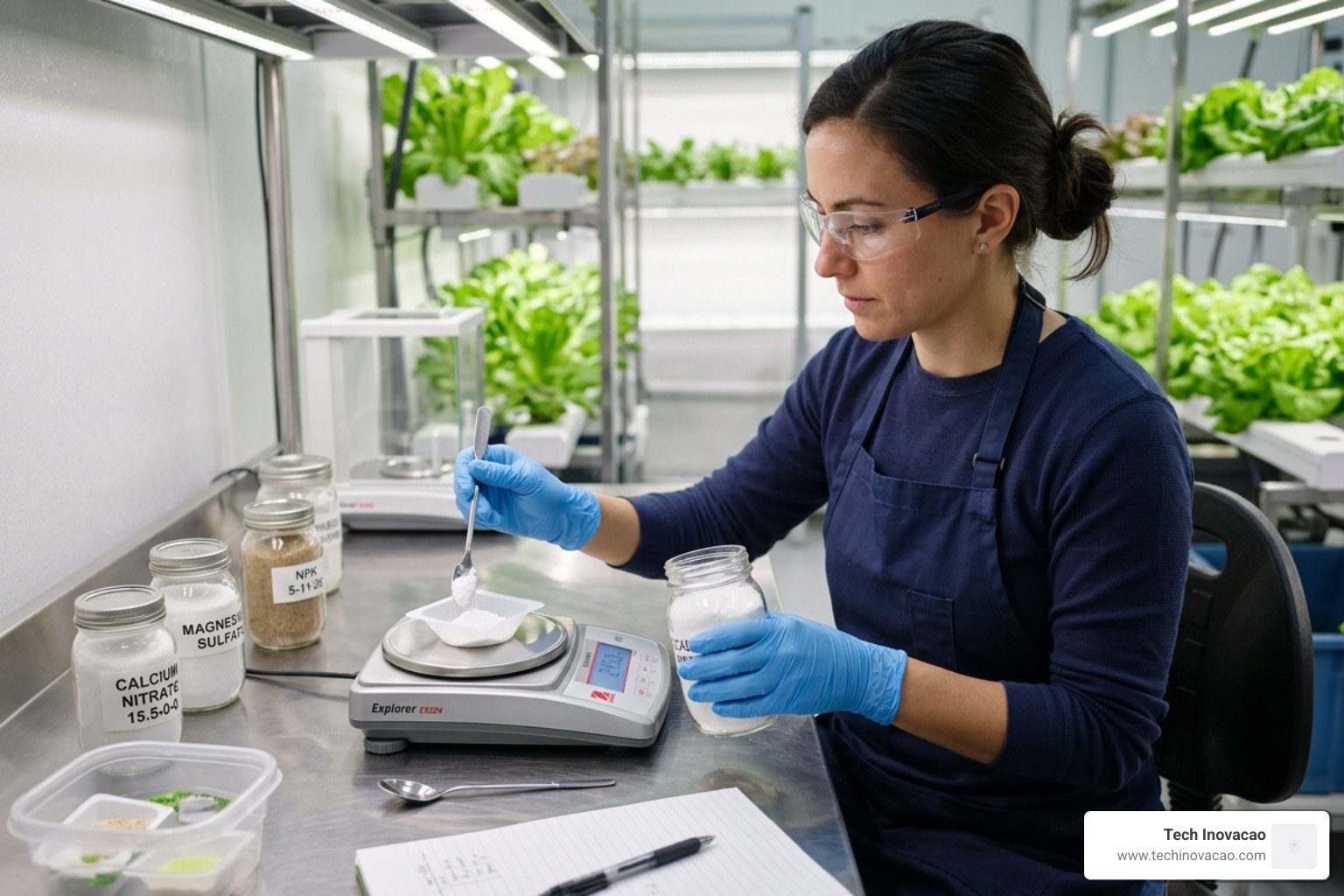
The biggest mistake beginners make is throwing all the salts into one bucket at once. This leads to precipitation—a chemical reaction where minerals (like Calcium and Sulfur) bind together and turn into a white sludge that sinks to the bottom. Once they turn into sludge, the plants can’t absorb them.
To prevent this, we use the Stock Solution Method, separating the ingredients into “Solution A” and “Solution B.”
- Prepare your water: Use room temperature distilled water. Solubility increases with temperature, so lukewarm water helps the salts dissolve faster.
- Mix Solution A: Dissolve your Calcium Nitrate and half of your Potassium Nitrate. Stir until the water is crystal clear.
- Mix Solution B: In a separate container, dissolve the Magnesium Sulfate, Monopotassium Phosphate, and the rest of the Potassium Nitrate.
- Add Micronutrients: These usually go into Solution B.
- Dilute into the Reservoir: Fill your main hydroponic tank with water first, then add Solution A, stir, and finally add Solution B. Never mix A and B together in their concentrated forms!
A Beginner-Friendly Hydroponic Nutrient Solution DIY Recipe
If you don’t want to buy six different bags of salts yet, you can use the “MasterBlend Method.” This is a popular “semi-DIY” approach that uses a pre-mixed base (4-18-38) combined with two other common salts.
For 5 gallons of nutrient solution, we recommend:
- 10 grams of MasterBlend 4-18-38
- 10 grams of Calcium Nitrate
- 5 grams of Magnesium Sulfate (Epsom salt)
The Order Matters:
- Dissolve the MasterBlend first.
- Dissolve the Epsom salt second.
- Dissolve the Calcium Nitrate last.
This recipe is fantastic for leafy greens and herbs. For fruiting plants like tomatoes, you may want to check out more specific DIY Hydroponic Nutrient Solution at Home guides that adjust the potassium levels during the flowering stage.
Measuring and Mixing Your Hydroponic Nutrient Solution DIY Accurately
Accuracy is the difference between a thriving garden and “nutrient burn.” When we talk about concentration, we often use PPM (Parts Per Million) or EC (Electrical Conductivity).
- Targeting PPM: For most herbs and leafy greens, you want a TDS (Total Dissolved Solids) reading of 800–1200 ppm.
- The 250:1 Factor: If you are making concentrated stock solutions, a common industry standard is a 250:1 ratio. This means 1 gallon of your concentrate will eventually make 250 gallons of usable plant food.
- Homogenization: Always stir your solution thoroughly. If the salts aren’t fully dissolved, your EC meter will give you a false low reading, leading you to add too much and accidentally “fry” your roots.
Monitoring and Maintaining Your DIY Solution
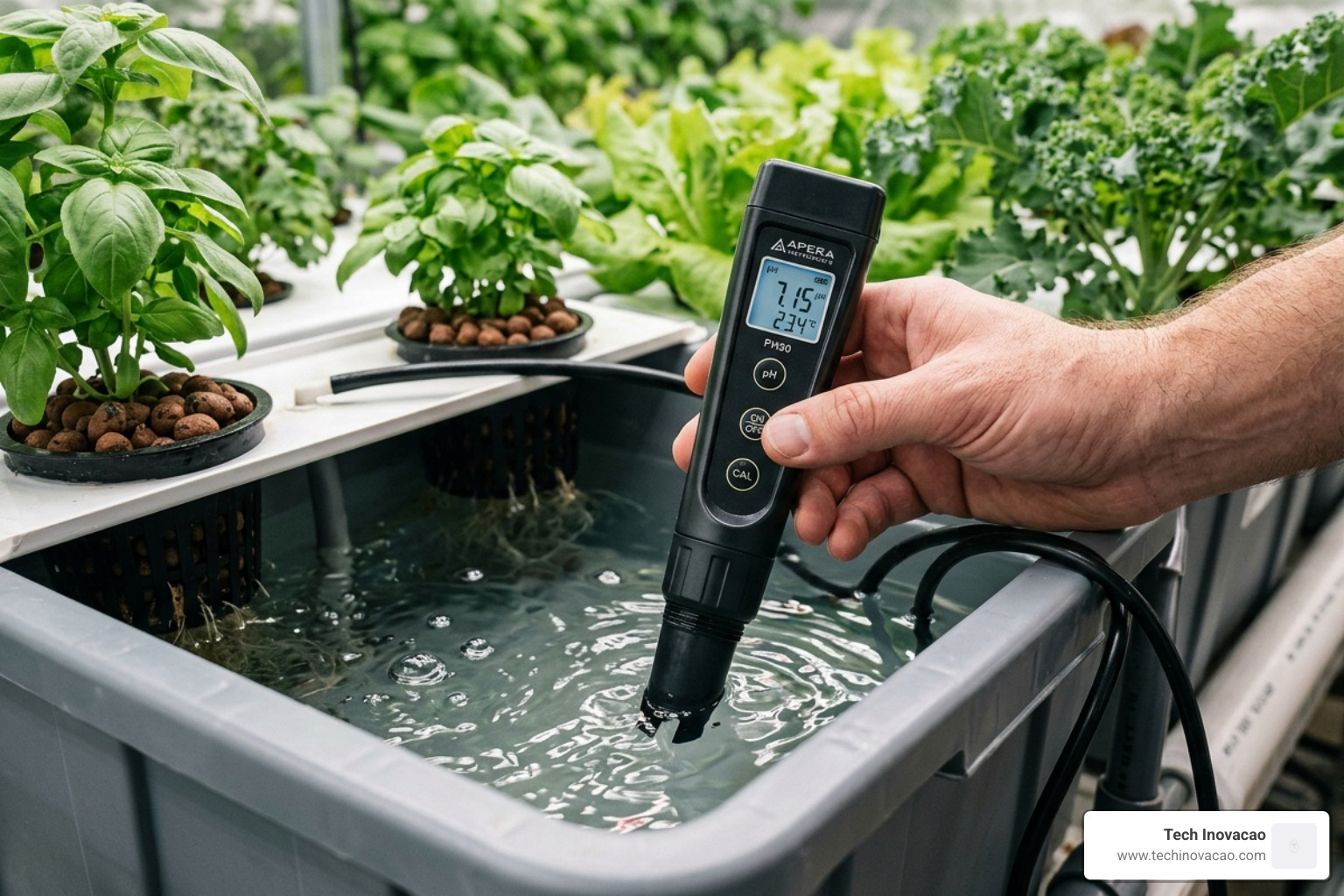
Once your hydroponic nutrient solution diy is in the system, your job isn’t done. Plants are “picky eaters.” They might take more Nitrogen one day and more Potassium the next, which causes the chemistry of the water to change.
The pH Sweet Spot
The ideal pH for almost all hydroponic plants is 5.5 to 6.5.
- If the pH is too high (alkaline), nutrients like Iron and Manganese get “locked out.”
- If the pH is too low (acidic), it can damage the roots and cause toxicity. Check your pH daily. You can use “pH Up” or “pH Down” (diluted phosphoric acid or potassium hydroxide) to make small adjustments.
Managing EC (Electrical Conductivity)
As plants drink water, the concentration of the remaining nutrients goes up. If your EC meter shows the numbers climbing, add more plain water to dilute it. If the numbers are dropping, your plants are hungry—add a little more of your A and B stock solutions.
The “Full Refresh”
Every 10 to 14 days, we recommend a complete reservoir flush. This means draining the old water and starting fresh. This prevents the buildup of “junk” salts—minerals that the plant doesn’t want but that are present in tap water or as byproducts of the fertilizer salts.
Troubleshooting Common Nutrient Issues
Even with the best hydroponic nutrient solution diy, things can go sideways. Your plants will “talk” to you through their leaves.
- Yellow Leaves (Nitrogen Deficiency): If the older, bottom leaves are turning pale yellow while the rest of the plant looks okay, they need more Nitrogen.
- Brown Edges (Tip Burn/Calcium Deficiency): This is common in lettuce. It often means the plant can’t move Calcium fast enough to the new growth. Check your airflow and ensure your Calcium Nitrate levels are correct.
- Blossom End Rot: If your tomatoes are rotting on the bottom, that’s a classic sign of Calcium deficiency.
- Stunted Growth: This usually points to an EC that is either too low (starvation) or a pH that is so far off the plants can’t eat.
Algae Prevention: Algae loves your nutrient solution as much as your plants do. Keep your reservoir completely dark. If light hits the water, algae will grow, steal the oxygen, and mess with your pH.
Frequently Asked Questions about DIY Nutrients
Can I use regular garden fertilizer for hydroponics?
Generally, no. Most “blue powder” garden fertilizers contain urea as a nitrogen source. In soil, bacteria break down urea into something plants can use. In a sterile hydroponic system, that bacteria isn’t there, and urea can become toxic or simply sit there unused while your plants starve. Additionally, garden fertilizers often lack the full range of micronutrients and may contain “fillers” that clog your pumps.
How often should I change my DIY nutrient solution?
We recommend a full change every 10 to 15 days. While you can just “top off” the water, eventually the ratio of nutrients becomes imbalanced because plants don’t eat every mineral at the same rate. A fresh start ensures your plants always have a balanced “buffet” to choose from.
Is it safe to use household scraps like banana peels or eggshells?
While we love the idea of recycling, using “raw” organic scraps in a hydroponic system is risky.
- Banana Peels: Boiling them into a “potassium tea” can work, but the sugars in the tea can invite root rot and harmful bacteria.
- Eggshells: You can extract calcium by dissolving crushed shells in vinegar or a weak acid, but it is very difficult to measure the exact concentration. For consistent results, stick to mineral salts. If you want to go organic, look into Aquaponics or specifically formulated organic hydroponic liquids.
Conclusion
Mastering a hydroponic nutrient solution diy is a rite of passage for any serious grower. It moves you from being a consumer to being a creator, giving you total control over the health and flavor of your harvest. Not only does it save you a significant amount of money—up to 50% or more over the long run—but it also allows you to tailor your nutrients to the specific growth stage of your plants.
Whether you are mixing raw salts from scratch or using the MasterBlend method, the key is precision, monitoring, and patience.
At Tech Inovacao, we believe that everyone should have access to fresh, healthy food. Our hydroponic herb growing systems are designed to make this process even easier, providing the perfect environment for your DIY nutrient experiments. By combining the cost-effectiveness of homemade nutrients with our effortless, soil-free technology, you can enjoy a year-round harvest of basil, mint, and cilantro right at your fingertips.
Ready to take the next step in your gardening journey? Effortless herb growing with Tech Inovacao is just a click away. Happy growing!
